Polyester and disperse dyes have a strong relationship because the fiber and the dye category match perfectly through an operational link. Polyester resists dyeing with multiple dye types, which produce successful results on cotton and other absorbent fibers. Disperse dyes solve that problem by giving manufacturers a reliable way to achieve strong shades, dependable fastness, and efficient production results on polyester fabric.
Why Polyester Cannot Be Dyed Like Cotton?
Polyester Is Hydrophobic
Polyester does not absorb water easily. That single characteristic shapes the entire dyeing approach.
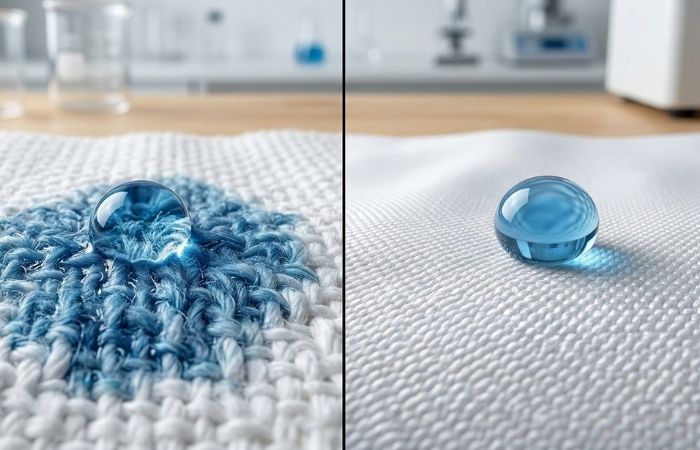
Cotton behaves very differently. It takes up moisture, swells in the dye bath, and allows water-based dye systems to interact with the fiber more readily. Polyester resists that process. Its low moisture regain means many dyes remain in the bath instead of moving into the fiber, which leads to weak uptake and poor shade development.
This is why polyester cannot be treated like a cellulosic fabric. The chemistry does not support it.
Polyester Has a Compact Structure
Polyester is also dense at the molecular level. Its internal structure leaves limited space for dye molecules to enter under normal conditions.
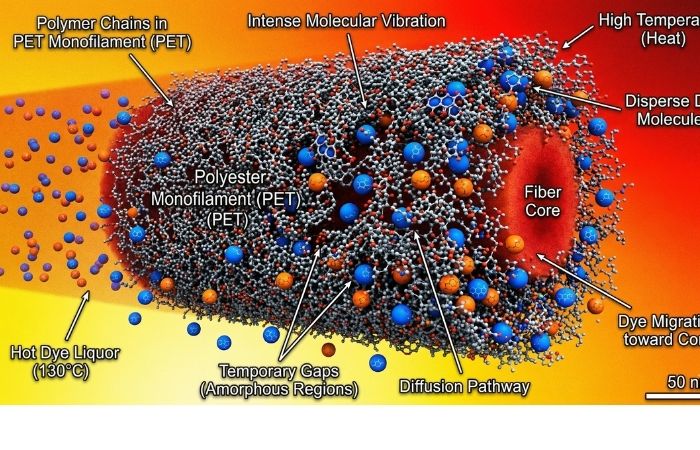
That compact structure matters because successful dyeing depends on more than surface contact. The dye must move into the fiber itself. With polyester, that becomes possible only when heat increases molecular mobility and creates temporary openings inside the polymer structure.
Without that thermal assistance, penetration is limited. So is performance.
Why Water-Soluble Dyes Perform Poorly?
The development of several dye categories emerged to serve fibers which absorb more and react differently to chemical substances. The water-based systems fail on polyester because they depend on water friendliness and fiber chemical reactions which polyester material lacks.
The dye solution becomes fully soluble yet it moves through the system without creating any visible color effect on the fabric material. That is why polyester does not simply need a stronger recipe. The fabric requires a dye category which matches its unique characteristics for proper coloring.
What Makes Disperse Dyes Different?
Low Water Solubility
Disperse dyes are only slightly soluble in water, and that characteristic is exactly what makes them useful for polyester.
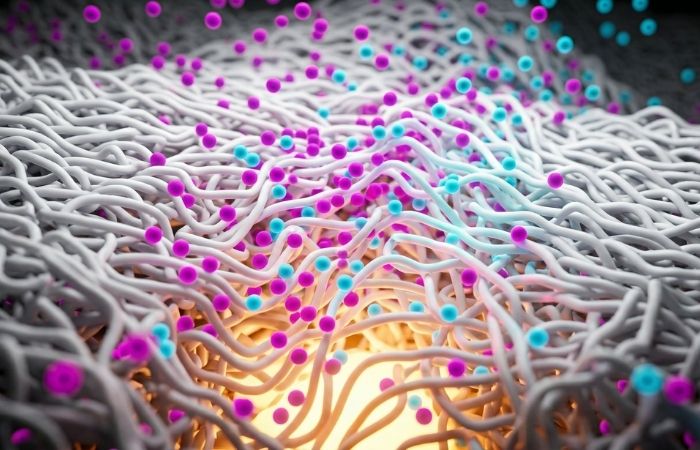
Instead of dissolving completely like many other dyes, they are applied as fine particles dispersed throughout the dye bath. From that dispersed state, the dye can transfer into the polyester fiber when the temperature is high enough.
This behavior fits polyester far better than a fully water-soluble system would.
Small Dye Particles
Particle size plays a central role in polyester dyeing. Disperse dyes are produced as very fine particles so they can remain evenly distributed in the bath and move efficiently toward the fiber surface.
That fine particle form supports more even dyeing, better diffusion, and cleaner shade development. It also explains why dispersion stability matters so much in production. If the dye particles are not well controlled, levelness and reproducibility can quickly suffer.
Ability to Enter Polyester Under Heat
Heat is not just a process setting in polyester dyeing. It is part of the mechanism.
At elevated temperatures, the polyester structure becomes more mobile, which allows disperse dye molecules to move into the fiber. As the fabric cools, that mobility decreases and the dye becomes physically retained within the polyester.
This is the key reason disperse dyes work so well on polyester. They are able to enter the fiber under the very conditions that polyester requires.
Why Disperse Dyes Are Used for Polyester?
Good Compatibility With Polyester Fiber
Disperse dyes prove to be the most effective choice for dyeing synthetic fibers, which include polyester and other hydrophobic materials. The fiber bonds together with its chemical structure through a process that other dye categories cannot achieve.
The operational system, which maintains compatibility with the mill system, enables dye substances to reach fiber cores instead of staying as surface stains. The process enables the fabric to achieve deeper color tones, which also become more resistant to fading during its final stage of development.
High-Temperature Diffusion Into the Fiber
Polyester dyeing depends on diffusion under heat. Disperse dyes are designed for that environment.
In high-temperature dyeing processes, the dye moves from the dispersed bath into the polyester as the fiber structure opens enough to allow entry. Whether the mill uses an exhaust method or a continuous heat-based process, the same basic principle applies. The dye must diffuse into the fiber, not merely cling to the surface.
That is the core reason disperse dyes are used for polyester.
Better Color Build-Up on Polyester
A commercially useful dye must do more than produce visible color. It must build shade efficiently and predictably across real production conditions.
Disperse dyes offer strong color build-up on polyester, which makes them suitable for light shades, mid-tones, and deeper commercial colors. This gives manufacturers the flexibility to meet a wide range of end-use requirements without relying on a dye class that is fundamentally mismatched to the fiber.
Good Wash and Sublimation Fastness
Fastness is one of the main reasons disperse dyes remain the standard choice for polyester.
When properly selected and correctly applied, disperse dyes can provide good wash fastness because the color is held within the fiber rather than resting loosely on the surface. Many grades also offer good sublimation fastness, which is especially important for polyester fabrics exposed to heat during finishing, pressing, transfer printing, or end use.
Not all disperse dyes perform identically, but as a class they offer the performance profile that polyester applications typically require.
For buyers who want to move from theory to product selection, it helps to look at disperse dye ranges designed specifically for polyester applications. If your team is sourcing disperse dyes for polyester fabric, Skycron’s disperse dyes is a strong next step. Skychem Group presents multiple disperse dye series for different process and performance needs, including options for leveling, deep shade build-up, printing, microfiber applications, and higher light fastness. This makes the page a practical resource for mills, dye houses, and textile buyers who need to compare solution directions before requesting technical support or pricing.
Why Other Dye Types Are Not the First Choice?
Why Are Reactive Dyes Unsuitable?
Reactive dyes perform well on cotton because they are designed to bond with cellulosic fibers under suitable conditions. Polyester does not offer the same fiber chemistry, so that dyeing mechanism does not translate effectively.
As a result, reactive dyes are not the preferred option for standard polyester dyeing.
Why Are Direct Dyes Ineffective?
Direct dyes are also poorly matched to polyester. They are far more effective on cellulose-based materials, where fiber affinity and dye behavior are more favorable.
On polyester, they generally show limited uptake and weak durability. That makes them unsuitable for applications where consistent shade and usable fastness matter.
Why Disperse Dyes Became the Standard?
Disperse dyes became the standard for polyester because they solve the actual dyeing problem. They match the fiber’s hydrophobic nature, work under industrial heat-based conditions, and provide the shade depth and fastness expected in commercial textile production.
The industry did not adopt them by accident. It adopted them because they work.
| Dye type | Best suited for | Limitation on polyester |
| Reactive dyes | Cotton and other cellulosic fibers | Lack the right bonding conditions on polyester |
| Direct dyes | Cotton and cellulose blends | Show weak affinity and poor durability |
| Disperse dyes | Polyester and similar synthetics | Best matched to heat-driven diffusion into the fiber |
Industrial Reasons for Using Disperse Dyes
Works Well in Mass Production
Laboratory success means very little if the result cannot be repeated in a factory.
Disperse dyes work well in established polyester dyeing systems, including high-temperature batch processes and continuous heat-based methods. That makes them practical for large-scale manufacturing, where repeatability, process control, and delivery schedules are critical.
Suitable for a Wide Shade Range
Polyester is used in fashion, sportswear, automotive textiles, home furnishings, and technical applications. Those markets demand variety.
Disperse dyes support a broad color range, which allows manufacturers to produce everything from clean pale shades to rich dark colors with greater confidence. That versatility is one of the reasons they remain central to polyester dyeing worldwide.
Supports Consistent Dyeing Results
Consistency operates as a mandatory commercial requirement that businesses need to survive in their market.
The right combination of dye with dispersing system and process conditions enables mills to produce better level shades through disperse dyes, which maintain their consistency between different production batches. The system achieves better quality control through its ability to reduce rework operations, which simultaneously boosts operational effectiveness.
The stable market environment generates actual worth for both manufacturers and their buyers.
In real production, dye selection is only part of the decision. End-use requirements often determine which full solution works best. For brands, mills, and sourcing teams that need more than a standalone dye product, Skychem Group’s polyester application solutions are a better fit for the next conversation. The page is built around end-use scenarios such as fashion, outdoor sports, workwear, high light fastness, home textile, denim, wool, and garment washing, with an emphasis on matching dyes and auxiliaries to performance goals.
Conclusion
Disperse dyes are used for polyester fabric because polyester is hydrophobic, compact, and resistant to many dye systems that work well on other fibers. Disperse dyes are designed to overcome those limits by diffusing into polyester under heat and delivering the shade depth, fastness, and process reliability required in commercial production. For textile businesses sourcing disperse dyes or polyester dyeing solutions, Skychem Group can be contacted here for a quote.
Recommended reading: