Peach finish, often called sueding, is a surface finishing technique that creates a soft, velvety handfeel by gently raising microfibers on the fabric face. The effect is mechanical at its core, but consistent results rely on the right auxiliaries and disciplined control of friction, tension, and cleanliness. This guide explains how mills keep peach finish uniform, durable, and low risk in production, with practical guidance you can apply style by style.
Process Scope
What peach finish is?
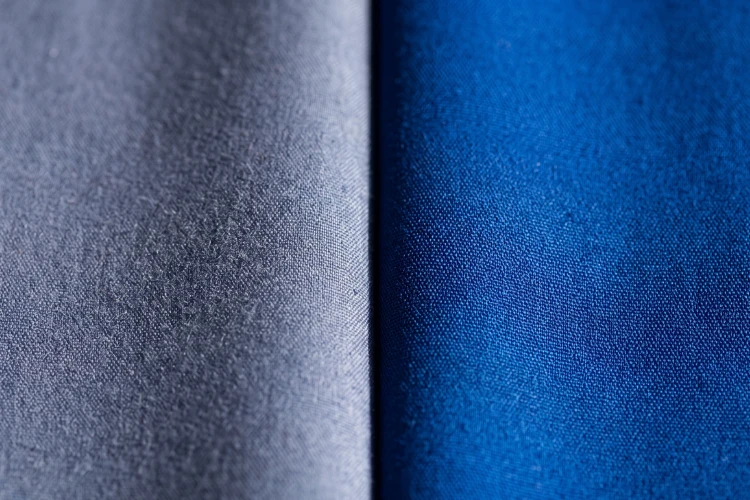
Peach finish is produced by controlled abrasion on the fabric surface using emery-covered rollers, sanding belts, or dedicated sueding units. The goal is to lift a fine, even nap that increases softness and reduces surface sheen, without cutting yarns, weakening the structure, or leaving visible streaks. Because the action is driven by friction, small shifts in settings, abrasive condition, or fabric surface state can quickly move the result from “soft peach” to “over-processed.”

Best-fit fabrics & end uses
Peach finish performs best on fabrics that can tolerate mild surface fiber disruption while maintaining strength and surface integrity. Microfiber polyester, selected polyester blends, and stable woven cotton or cotton blends are common candidates, as are certain knits when dimensional stability is well managed. The finish is frequently specified for casualwear, outerwear linings, home textiles, and soft-touch performance-lifestyle products that benefit from a matte look and comfortable touch.
Sueding Control
Standard process flow
Most production lines follow a consistent logic: start with a clean, stable surface; create a controlled friction environment; remove generated dust immediately; stabilize the fabric; then build the final handfeel and performance with chemistry. In practice, that means preparing the fabric for repeatable friction behavior, using pre-sueding lubrication when needed, running sueding in one or more passes, extracting dust and loose fibers at the source, then heat setting or stabilizing before chemical finishing, inspection, and testing.
Core settings to lock
Peach finish quality is determined by how aggressively the abrasive surface interacts with fibers. Contact pressure and the balance between line speed and roller speed strongly influence whether the surface is being gently polished or aggressively cut. Fabric tension and guiding are equally important, because instability often shows up as streaks, widthwise inconsistency, or directional marks that become more obvious after finishing.
The number of passes should be treated as a controlled variable with a clear upper limit. Additional passes can improve the peach feel up to a point, but they also accelerate strength loss and fuzz drop. Moisture and temperature also matter because they affect friction behavior, dusting tendency, and the uniformity of the raised nap.
A reliable production approach is to define a narrow operating window for each fabric style, then adjust only one parameter at a time during corrections. This keeps troubleshooting repeatable and prevents “compensating” with chemistry for a mechanical root cause.
Pre-sueding lubrication & anti-friction aids
Pre-sueding lubrication is best treated as a process stabilizer rather than a handfeel finisher. It reduces friction spikes, lowers heat buildup, and helps prevent micro tearing that later appears as harsh streaks, rapid pilling, or uneven peach. When applied correctly, it improves widthwise uniformity and reduces fiber damage, especially on microfibers, tight constructions, and blends that are abrasion sensitive.
The main risk is overuse. Excess lubrication can flatten the peach effect, increase oily marks, and complicate compatibility with downstream softeners or functional finishes. The target should be the minimum effective add-on that stabilizes sueding, confirmed through a short trial that checks both surface appearance and stain risk before bulk runs.
Dust removal & heat setting
Sueding generates dust and loose fiber fragments. If dust control is weak, redeposition can create patchy dull zones, streaks that resemble finishing marks, and greyish contamination that is difficult to remove later. Dust control should be treated as a quality parameter, not housekeeping.
Heat setting or final stabilization helps lock dimensional stability and support a consistent surface appearance. It can also influence handfeel, particularly when paired with silicone softeners or light film-formers. For best repeatability, stabilization conditions should be aligned with the planned finishing recipe, not decided independently.

Finishing Chemistry
Softener selection
After sueding, softeners are used to build the signature peach handfeel while tuning surface friction. A silky, elastic peach requires a different softener balance than a dry, powdery peach. Microfiber constructions often need tighter slip management to avoid a grabby touch, while cotton-rich fabrics may need softness improvement without increasing pilling tendency.
Selection should consider three practical risks. First is yellowing, especially when heat exposure is part of the line. Second is hydrophilicity shift, since some softeners can reduce moisture management and affect wear comfort. Third is compatibility, because silicone systems and polymer components can destabilize emulsions or create streaks if combined without checks. In many mills, the fastest path to a stable peach hand is to start with a proven peach fabric softener baseline recipe, then fine-tune add-on and drying conditions to match the fabric family.
Anti-pilling support
Sueding improves softness, but it also increases the number of free fiber ends at the surface. That raises pilling risk, particularly on synthetics and blends where fiber mobility is high. Anti-pilling systems typically work by reducing fiber migration, improving fiber anchoring, or forming a controlled surface support layer that resists entanglement.
A practical way to manage anti-pilling is to first determine whether the issue is mechanical damage or fiber mobility. If the surface is being broken, the primary correction should be mechanical, such as lowering pressure, optimizing speed ratios, or reducing passes. If the surface is mechanically stable but pills still form after wear or wash, a functional finishes program can provide the surface support needed for durability. Add-on levels should be optimized carefully to protect handfeel and avoid excessive film formation.

Anti-static & slip
Peach-finished surfaces can build static more easily, especially on polyester and microfiber styles. Static attracts dust and lint, increases clinging during garment making, and can worsen perceived unevenness through handling marks. Anti-static and slip control are often treated as a combined objective: keep the surface clean in production and comfortable in wear, without creating an oily touch or destabilizing the finishing bath.
The most useful systems are those that remain stable across humidity changes while maintaining the peach handfeel. Compatibility discipline matters because some anti-static chemistries can interact with silicone softeners or polymer components, leading to streaking, spots, or uneven surface friction.
Compatibility & stain risk control
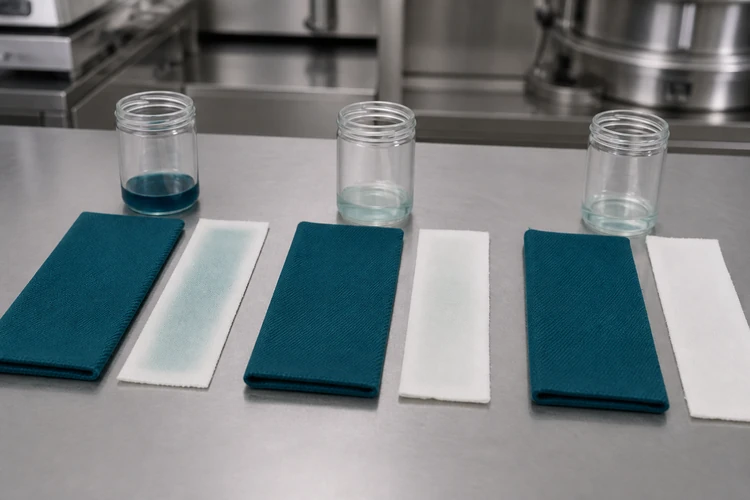
Compatibility is where many peach finish programs fail even when the main products are correct. Oily spots, streaks, and redeposition are often caused by unstable emulsions, poor mixing order, hard water effects, or migration during drying. Prevention is largely process discipline: keep pH, temperature, and water hardness within the stability window of your system; standardize pre-dilution and addition order; avoid overloading silicone or polymer components without a quick compatibility screen; and tune expression and drying so migration does not create visible marks.
Treat stain risk as a defined release gate before scaling. A short, controlled trial on the exact fabric style is usually enough to confirm whether a recipe is stable.
Targets and Checks
Handfeel & surface uniformity
Handfeel must be consistent across width, across rolls, and across lots. Define a clear internal target that operators can reproduce, then verify it under controlled lighting with side-to-side comparisons and direction checks. Because nap direction affects light reflection, uniformity evaluation should include observation in both directions to avoid overlooking directional shading.
Pilling, abrasion, strength loss
Because sueding is abrasive, durability should be verified alongside aesthetics. Common test references include:
- Pilling using the modified Martindale method, such as ISO 12945-2
- Abrasion resistance evaluation, such as ISO 12947-2
- Tensile strength testing where relevant, such as ISO 13934-1
The goal is not to list every possible test. It is to connect your targeted peach handfeel to measurable durability outcomes, then align acceptance criteria before production scaling.
Rubbing risk after sueding
Peach finish can increase rubbing sensitivity because the surface contains more free fiber ends and can pick up or transfer colorants and soils more easily. Even in a finishing-focused program, it is appropriate to include rubbing verification as a risk checkpoint and align it with dyeing wash-off and fixation practices. A commonly referenced method is ISO 105-X12, which evaluates color fastness to rubbing.

Troubleshooting
Uneven peach effect
Uneven peach effect is commonly driven by instability in tension, guiding, or contact uniformity across width, sometimes compounded by uneven abrasive wear. Start by confirming that tension and guiding are stable and repeatable, then audit abrasive conditions and the contact profile. If the surface shows signs of micro damage rather than simple unevenness, optimize pre-sueding lubrication to stabilize friction, but avoid increasing add-on until mechanical causes are ruled out.
Heavy pilling or fuzz drop
Heavy pilling or fuzz drop often indicates that sueding is too aggressive for the fabric style, due to excessive pressure, too many passes, or an unfavorable speed ratio. Reduce mechanical aggression first and confirm whether surface damage decreases. If pilling persists after mechanical correction, functional finishing can provide surface support for durability, but the add-on should be optimized to protect handfeel and minimize shade change risk.
Strength damage & harsh hand
Strength loss and harsh hand typically result from mechanical over-processing, combined with stabilization conditions or softener choices that do not match the fiber and construction. The fastest correction is to reduce the mechanical load, then re-balance the softener system to rebuild smoothness and resilience. If the fabric feels collapsed after drying, review drying and setting conditions for migration, over-curing, or recipe incompatibility.
Oily spots & streaks
Oily spots and streaks commonly result from silicone overload, emulsion instability, poor mixing order, or migration during drying. Corrective action should prioritize stability: standardize pre-dilution, control bath conditions, reduce add-on if needed, and adjust expression and drying to minimize migration marks. If spots correlate with hard water or variable pH, stabilize those inputs first before changing the core chemistry.
Conclusion
A strong peach finish is not achieved by sueding alone. It is built through controlled mechanical action, disciplined dust management, and a finishing chemistry package that balances handfeel, durability, and defect risk. If you want support selecting softeners and functional finishes, or you need help stabilizing recipes to prevent streaks and oily marks, please contact Skychem Group here.
Recommened reading: