Silk dyeing is unique because silk is a protein fiber that responds quickly to pH shifts, temperature ramps, and mechanical stress. Small changes in bath chemistry can alter strike rate, levelness, and luster. Bulk success depends on controlling substrate readiness, pH trajectory, circulation, and wash-off discipline, not only the dye recipe.

Silk Dyeing Overview
Silk fiber sensitivity and process risk
Silk is primarily fibroin, and its performance is strongly influenced by chemical severity and physical handling. In production, most failures trace to a small set of repeatable risks:
- Fiber tendering from excessive alkalinity, strong oxidants, or aggressive time temperature exposure
- Luster loss caused by overprocessing, harsh chemistry, or uncontrolled friction
- Crease marks and rope lines from rope form handling and unstable circulation
- Shade variation from pH drift, local concentration shocks, or inconsistent substrate history
Managing these risks requires a system view. The same shade recipe can behave differently when degumming consistency, water quality, buffer capacity, dosing practice, and machine hydrodynamics change across sites or seasons.
Typical bulk quality targets
Bulk programs normally define three aligned target layers: appearance targets (tolerance, levelness, cleanness, luster), performance targets (wash, rubbing, perspiration, and sometimes light fastness depending on end use), and process targets (right first time rate, rework rate, and batch to batch delta control). Locking these targets early prevents avoidable rework later, because dye class choice, auxiliary package, and wash-off intensity should all be selected to meet the required delivery standard.
Silk Substrate Readiness
Degumming status and impact on shade yield
Degumming removes sericin and exposes dye sites on fibroin. Variability in degumming endpoint is a common cause of barre, patchy uptake, and depth differences between lots. A dyehouse can run perfect chemistry and still miss shade if the substrate is not consistent. For bulk programs, document degumming status, confirm supplier stability lot to lot, and revalidate lab dips when fabric construction, yarn source, finishing history, or supplier changes. This approach is especially important for pale shades and high-luster fabrics where small differences are visually amplified.
Fabric condition checks before dyeing
A short incoming check reduces surprises and improves repeatability across bulk lots. The most valuable checks focus on contamination, physical damage, and lot integrity:
- Surface cleanliness, including residual oils, lubricants, softeners, and packaging contamination
- Physical condition, including crease memory, rope marks, and tension distortion
- Lot integrity, including mixed lots, mixed widths or weights, and mixed degumming history
Standardize these checks in the lot traveler and treat failures as a process stop. Fixing the substrate condition after dyeing is usually more expensive than stabilizing it before dyeing.

Dyes for Silk
Acid dyes
Acid dyes are widely used on silk due to strong affinity under acidic conditions and broad shade range. Bulk consistency improves when strike is controlled through stable buffering, staged acid adjustment where appropriate, and adequate circulation during dosing and heating. Wash-off requirements depend on depth and end use, so planning the post-dye route is part of selecting the dye.
A practical way to structure dye selection is to build a shade card by end use and fastness tier, then qualify a small set of dyes that scale reliably from lab to bulk on your typical silk constructions. Skyacido’s acid dyes range supports this approach by providing options across depth bands, allowing mills and buyers to align shade targets with a consistent dye platform. The portfolio view also helps procurement teams consolidate SKUs and reduce recipe drift across factories.
Metal complex dyes
Metal complex dyes are often chosen for deeper shades and programs that prioritize wet fastness. On silk, the main production requirement is disciplined control of pH and temperature to protect handle and luster while reaching depth targets. The aftertreatment route should also be defined clearly because incomplete clearing can present as dullness or bleeding risk, especially in darker shades that carry higher dye load.
A bulk qualification plan typically compares build, leveling behavior, and fastness outcomes across a short list of candidates in your core constructions. Skyacido’s metal complex dyes category page supports early-stage selection by grouping suitable options in one place, which helps dyehouses standardize shade development and helps buyers evaluate whether the dye system fits the expected performance tier. This reduces trial cycles and improves repeat order consistency.
Reactive dyes on silk
Reactive dyes can be applied on silk in some operations, often for workflow alignment across multiple fibers or for specific shade effects. The key constraint is fixation chemistry. Many reactive systems rely on alkaline conditions that can increase risk to silk if exposure is excessive. Production logic should therefore prioritize controlled fixation conditions, minimized alkaline exposure time, and thorough wash-off to reduce bleeding and backstaining.
Reactive programs benefit from clear internal boundaries: which constructions are eligible, which depth bands are feasible, and what wash-off endpoint is required for the delivery standard. Skyzol’s reactive dyes selection supports mills building a defined reactive platform, especially when the objective is process harmonization across product lines. Consolidating dye options this way helps technical teams maintain repeatability and helps buyers manage consistent sourcing specifications across regions.
Pre-Treatment for Consistency
Scouring to remove oils and finishes
Even when silk is marketed as ready to dye, residual oils, lubricants, and finishing agents can cause repellency, streaking, and shade unlevelness. A controlled cleaning step improves wetting uniformity and reduces lot variation. For silk, scouring should avoid harsh alkalinity and aggressive oxidation unless validated for the specific construction. The target outcome is uniform absorbency and stable appearance, not maximum chemical intensity. A simple wetting check plus visual review of streak-prone zones often catches issues before dye addition.
Wetting and crease prevention in rope form
Rope dyeing increases the risk of crease marks and rope lines, especially for lightweight fabrics and high-luster constructions. The most effective controls combine uniform wet-out, friction management, and stable circulation so fabric does not lock into sharp folds during heating or holds. Chemical support should match machine behavior and liquor ratio, because an auxiliary that performs well in one machine may underperform in another due to hydrodynamics and shear.
For mills building a repeatable rope-form silk program, a standardized auxiliary package reduces operator variation and improves first-pass yield. Skychem Group’s pre-treatment auxiliaries category provides practical options used in wetting, detergency support, and crease control systems. Reviewing the available chemistry as a set helps technical teams build a compatible package rather than mixing unrelated products that can destabilize foam, leveling, or handle.

Bath Setup and Auxiliary Package
Water quality control and sequestering
Water hardness and trace metals can shift shade, reduce dye efficiency, and increase dullness risk. This effect is more visible in pale shades, pastels, and high-luster silk. A consistent water management approach typically includes hardness control plus sequestering to bind calcium, magnesium, and problematic trace metals. For multi-site production, define acceptable incoming water ranges or require a standard conditioning step so the same recipe behaves similarly across regions.
Buffering strategy and pH window control
pH on silk should be managed as a controlled trajectory rather than a single set point. Uncontrolled pH drops can cause rapid strike and unlevelness. Variable pH endpoints between batches can cause shade drift even when dosing is unchanged. Define a pH window by dye class and depth band, then measure at repeatable process moments such as after bath make-up, after dye addition, during key heating points, and before draining. This creates comparable data that supports troubleshooting and reduces guesswork.
Leveling and migration control aids
Leveling and migration aids are used to slow initial strike and support redistribution, improving levelness in bulk. Choice and dosage depend on dye class, machine type, and depth. Performance improves when the auxiliary package is standardized by substrate family and depth band, then tuned by controlled lab-to-bulk scale-up. Frequent ad hoc changes to leveling chemistry can create more variability than they solve.
Foam control and bath stability
Foam reduces effective circulation and can introduce local concentration differences that show up as streaks. Good foam control is a combined chemical and mechanical discipline. Use a compatible defoamer that does not create spots or harm handle, and confirm mechanical contributors such as air entrainment at returns, pump condition, and turbulent fall height. Stable dosing practice matters, since dumping chemicals into low-flow zones can trigger temporary but damaging concentration peaks.
Process Control
Addition order and circulation
Addition order and circulation stability largely determine strike behavior and levelness. A practical bulk sequence is:
- Stabilize circulation and confirm uniform wet-out
- Condition the bath with sequestering, buffer, and leveling support
- Add dye under strong circulation to avoid local concentration peaks
- Adjust pH in a controlled manner appropriate to the dye system, often staged rather than a single correction
Avoid dosing into dead zones or low-flow areas. Once a streak is created by local shock, later leveling is limited, especially on smooth, high-luster silk where optical defects are obvious.
Temperature profile
Silk benefits from a smooth heating ramp and clearly defined hold points. Rapid heating can amplify strike differences. Excessive temperature or extended exposure can weaken the fiber and reduce luster. Lock a temperature profile for each substrate family and depth band, then change one variable at a time when optimizing, such as heating rate, hold time, or pH adjustment timing. Documenting these changes turns troubleshooting into an SOP improvement rather than a repeated trial.
Rinse, wash-off, neutralize
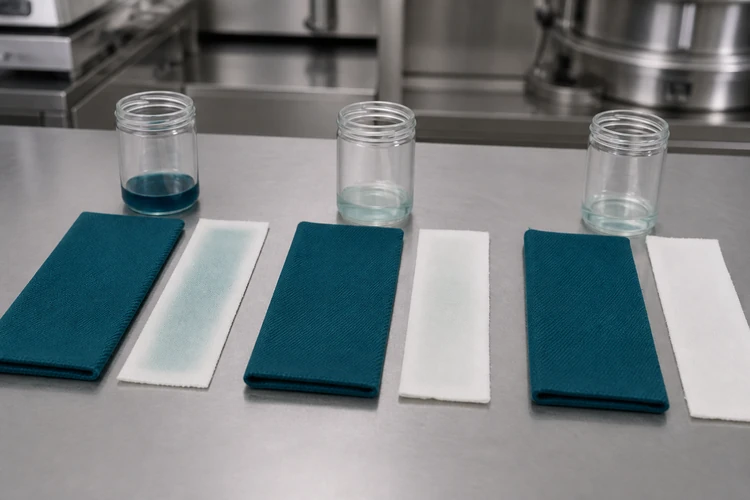
Post-dye cleaning is where many silk programs either succeed or fail on bleeding and shade clarity. Rinsing removes loose colorants and residual auxiliaries. Wash-off should be matched to dye class and shade depth, with clear endpoints that operators can execute consistently. Final neutralization should bring the fabric to a stable, storage-safe pH that supports finishing performance. Consistent wash-off and neutralization endpoints are also a direct way to reduce batch-to-batch shade drift.
Finishing and Handle Management
Softening options and compatibility
Silk is judged heavily by handle and drape, so finishing chemistry must be selected with shade stability and fastness in mind. A softener that improves touch but reduces rubbing fastness or causes shade shift is a net loss in commercial delivery. Compatibility with the dye and auxiliary history matters, as does the stability of the finish under the customer’s care conditions.
A structured finishing approach starts with defining the handle target, then selecting a compatible softener system and validating it on representative shade depths. Skychem Group’s softening finishing category supports this by grouping finishing options suitable for mills that need repeatable handle management across multiple silk articles. Reviewing the finishing portfolio as a system helps teams avoid isolated product choices that introduce staining, oiliness, or unpredictable shade movement.
Drying and heat setting precautions
Pure silk generally requires conservative drying and careful tension control rather than aggressive heat setting. Over-drying can reduce luster and create harshness. Excess tension can distort fabric and change surface optics. Validate any thermal finishing window for shade shift and handle change, especially on blended constructions or specialty finishes. When rope form marks are a risk, avoid finishing conditions that lock in creases.
Defects and Corrective Actions
Shade unlevelness and streaking
Shade unlevelness typically comes from uneven wetting, uncontrolled strike due to pH drift, inadequate circulation during dosing, or inconsistent degumming. Corrective action is usually more effective when it targets root causes rather than adding more dye. Stabilize wet-out, improve buffer discipline, stage pH adjustment, and ensure dosing occurs under strong circulation. When a machine has persistent flow shadows, mechanical optimization is often required in addition to chemical adjustment.
Low depth, dullness, and shade drift
Low depth can be driven by dye selection mismatch, hard or contaminated water, insufficient bath conditioning, or inadequate time for controlled exhaustion. Dullness is frequently linked to trace metals, incompatible auxiliary residues, or overly severe processing that alters the silk surface. Shade drift between batches is commonly a control problem. Variable pH endpoints, different heating rates, inconsistent wash-off endpoints, and changes in substrate readiness are typical drivers. Tightening measurement points and endpoints often reduces drift more than changing dyes.
Crease marks and rope lines
Crease marks and rope lines are primarily mechanical faults influenced by friction, loading practice, and circulation stability. Chemical support helps, but it must be paired with correct rope handling and conservative thermal exposure. Improve wet-out uniformity, manage friction, and avoid conditions that lock in folds. Validate the anti-crease system on the most crease-sensitive constructions rather than only on stable fabrics.
Qc and Release Testing
In-process checks and shade pull plan
A repeatable in-process plan improves first-pass yield and reduces late-stage surprises. The most useful checks are:
- pH checkpoints at consistent stages such as after bath make-up, after dye addition, and near end of hold
- Standardized shade pulls under controlled lighting and agreed viewing conditions
- Notes on circulation stability and foam behavior during dosing and heating
This plan turns process variation into traceable data that can be corrected systematically.
Fastness scope for commercial delivery
Define the fastness scope by end use and shade depth, then standardize it for each product line so release decisions are consistent across sites. Method references should come from official sources such as the ISO color fastness standards committee and AATCC, while pass criteria should be specified in your customer specification and contract documentation. Align test frequency and sampling logic with risk, since deeper shades and higher dye loads often require tighter wash-off control and closer monitoring.

Conclusion
Repeatable silk dyeing in bulk depends on controlling substrate readiness, maintaining a stable pH window, protecting silk from excessive chemical severity, and running a disciplined temperature profile with reliable circulation. Dye selection should be matched to required shade range and performance, and post-dye wash-off and neutralization should be treated as core steps, not optional cleanup.
Skychem Group supports mills and buyers with dye and auxiliary selection, application guidance, and lab-to-bulk scale-up discipline for silk programs. Technical teams can share substrate details, machine type, target shades, and required fastness scope to receive practical alignment on dye systems and compatible auxiliary packages. Feel free to connect with the team here: https://skychemi.com/contact-us/.
Recommended reading: