Direct dyes remain a practical colorant choice for cotton and other cellulosics when mills need broad shade availability and straightforward dyeing. This article explains how direct dyes are classified and provides representative examples, plus buyer checks that improve sourcing accuracy and production repeatability.
Direct Dyes Basics
Where direct dyes are used?
Direct dyes are primarily applied on cellulosics such as cotton, viscose, modal, and linen. They are also used on paper and some other regenerated cellulose substrates. Typical applications include woven and knit programs where cost control, shade matching, and scalable production matter.
What direct dyes are best at?
Direct dyes provide broad shade availability and relatively simple dyeing routes on cellulosics, often with good dyehouse throughput. For many routine shades, they offer an efficient option for bulk programs when the fastness targets are set realistically for the end use and market.
Common limits
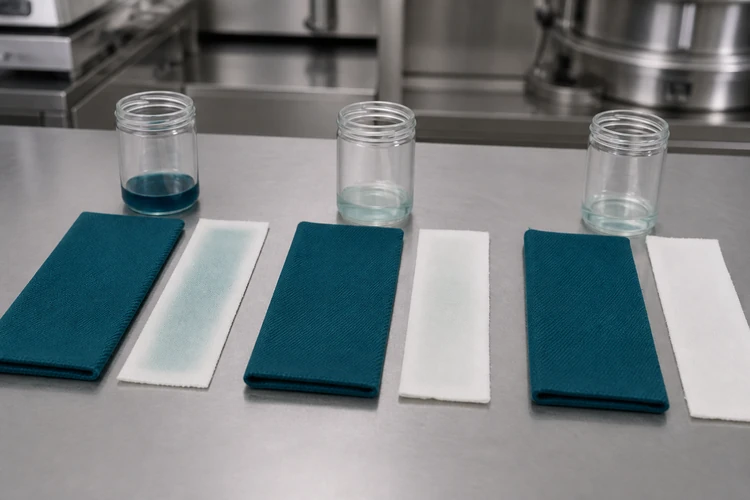
Wet fastness is the main constraint, especially wash staining and wet rubbing in deep shades. In practice, dyehouses manage these risks through controlled electrolyte addition, strong wash off and soaping, and appropriate fixing or aftertreatment choices aligned with the required fastness and handle expectations.

Classification by Chemical Type
Azo direct dyes
Azo direct dyes represent the largest commercial family in many direct dye ranges.
Typical examples (CI categories): Direct Yellow series, Direct Orange series, Direct Red series, Direct Brown series, Direct Black series.
Buying note: Azo direct dyes cover a very wide shade range. Fastness and reproducibility depend strongly on shade depth, recipe design, and wash off quality, so buyers should evaluate performance at the target depth rather than relying on light shade data.
Stilbene bright direct dyes
Stilbene and related bright direct dye types are typically selected for high brightness in yellow to yellow green shades.
Typical examples (CI categories): Direct Yellow bright types and other high brightness yellow green shades.
Buying note: Brightness driven choices should be paired with clear expectations for light exposure, because end use conditions such as curtains, window textiles, and outdoor adjacent uses can change the practical ranking of dye options.
Phthalocyanine direct dyes
Phthalocyanine based direct dyes are commonly associated with saturated blues and blue green shades.
Typical examples (CI categories): Direct Blue series, Direct Turquoise series.
Buying note: These dyes can deliver strong blues and greens. For deep shades, confirm wet rubbing risk and mixture compatibility, especially when recipes are used across different fabric constructions or machine types.
Classification by Dyeing Behavior
Substantivity and salt response
Direct dyes can be grouped by substantivity and their response to electrolyte addition.
Typical examples: leveling oriented direct dye sets with lower substantivity versus deep shade direct dye sets with higher substantivity.
Process note: Electrolyte dosing strategy influences exhaustion, leveling, and repeatability. Higher substantivity options may exhaust faster, improving productivity but increasing unlevel risk if addition order, circulation, and temperature control are not stable.
Leveling and migration
Leveling and migration behavior is a practical production classification, especially for knits and for styles that require tight barre control.
Typical examples: knit friendly leveling types versus higher exhaustion types used for faster batch throughput.
Process note: Unlevel dyeing is often driven by local concentration peaks, insufficient circulation, or an aggressive temperature ramp. Classifying dyes by migration window helps stabilize shade uniformity across machines and batch sizes.

Build-up for dark shades
Build-up describes how efficiently a dye or dye system generates depth while keeping surface dye and staining under control.
Typical examples: Direct Black systems, often mixtures, and navy combinations using compatible blues plus shading dyes.
Process note: Dark shades usually require stronger wash off and soaping control. Many programs also evaluate a fixing step to reduce staining and wet rubbing complaints, with attention to possible shade change and handling impact.
Classification by Fastness Target
Wash fastness and staining
Fastness based classification starts with the specific wash requirement and the staining risk to adjacent fibers or trims.
Typical examples: direct dyes positioned for home textiles and bedding programs where staining control is important.
Selection note: Define the wash fastness target and confirm whether a fixing step is acceptable. In many programs, the decision is not only pass or fail, but also whether aftertreatment cost, shade shift, and handle change are acceptable.
Wet rubbing risk
Wet rubbing is a frequent complaint driver for blacks and navies, especially on compact constructions and deep depths.
Typical examples: black and navy direct dye classes that show higher wet rubbing sensitivity at deep depths.
Mitigation note: Focus on wash off strength, residual surface dye control, and fixing compatibility with downstream finishing. The Skydiro direct dyes range can be used as a practical reference for how direct dye shade families are positioned and how mills typically organize direct dye options by application needs and depth targets. It also helps buyers connect shade selection to supporting auxiliaries for rinsing, soaping, and fixing that reduce staining and rubbing risk in production.

Examples to Use in Sourcing and Specs
Shade group examples
Organizing examples by shade group helps align technical discussions when suppliers use different trade names for similar CI classes.
- Yellow and orange: Direct Yellow series, Direct Orange series
- Red and maroon: Direct Red series, Direct Bordeaux like shades (CI categories)
- Blue and green: Direct Blue series, Direct Turquoise series
- Black and dark: Direct Black series, deep navy mixture approaches
For buyers, the goal is to map the shade group to the behavior and fastness requirement, not to select purely by shade family.
How to read product naming
Use CI naming as the technical anchor and treat trade names as supplier specific. Confirm the CI mapping, strength basis, and the internal reference standard used for strength comparison. Ask for lot control approach, shade tolerance expectations, and whether recommended auxiliaries and aftertreatment steps are required to achieve the stated fastness.
Direct Dye Selection
Match fiber and process
Start with substrate and process route. Cotton programs often allow broader direct dye choices, while viscose and modal commonly require closer control of leveling and staining behavior due to differences in fiber morphology and dye uptake. Confirm whether the route is batch or continuous and whether the chosen direct dye set is positioned for padding or CPB processing.
Match shade depth
Separate pale to medium shades from deep shades during selection. Deep shades magnify build-up limits, staining risk, and rubbing sensitivity. Black and navy programs often need a compatible combination strategy plus stronger wash off control, not only a single dye choice.
Close fastness gaps
Decide early whether fixing is allowed, define wash off and soaping expectations, and check compatibility with finishing. Fixing can improve wet fastness but may introduce shade change, handle change, or finishing constraints, so it should be defined in the technical specification rather than used only as a corrective action.
Check compatibility for mixtures
Compatibility matters for trichromatic sets, navy mixtures, and black systems. Align exhaustion rate and migration behavior to reduce metamerism, shade drift, and rework. The broader textile color solutions hub can help buyers compare direct dyes alongside adjacent dye classes and the auxiliaries that support them. This is useful when a program needs consistent shade matching across product categories or when fastness targets require evaluating alternative dye classes.

Conclusion
Direct dyes can be sourced more reliably when buyers classify them by chemical type, dyeing behavior, and the fastness target that matters to the end use. Representative examples within each class connect the classification to purchasing decisions, while lab dips at real depth validate compatibility, staining control, and rubbing risk. Share fiber content, fabric construction, machine type, shade depth, and required fastness to receive a direct dye and auxiliary recommendation via contact us.
Recommended reading: