This guide compares solvent dyes for plastics, printing inks, and coatings by solubility, heat resistance, light fastness, and migration performance, so formulators can match the right grade to a specific solvent system, processing temperature, and end-use application.
What Are Solvent Dyes?
Solvent dyes are colorants that dissolve fully into the host medium at a molecular level, giving plastics, printing inks, and coatings their characteristic transparency, brightness, and consistent shade.
Choosing a solvent dye for plastics, printing inks, or coatings comes down to three practical questions: does it dissolve cleanly in the carrier system, will it hold up at the required processing temperature, and will it stay in place once the product ships.
Why Use Solvent Dyes Instead of Pigments?
Pigments form particle suspensions that scatter light, which can introduce haze and uneven color strength in transparent parts. Solvent dyes dissolve fully in the host medium, producing clear, vibrant color even in thin films or lightly tinted plastics. For applications where transparency and color intensity matter more than opacity, such as clear plastic components, flexible packaging inks, or wood stains, solvent dyes are typically the better fit.
Key Factors for Selecting Solvent Dyes
Four factors most often determine whether a solvent dye grade performs as expected in a given application: solubility in the carrier system, heat resistance during processing, light fastness under end-use exposure, and migration resistance once the product is in service.

Solubility
Solvent dyes only perform as intended when they fully dissolve in the carrier a formulator is already using. Compatibility with the specific solvent blend determines both color strength and clarity in the finished product.
Ketones and Esters. Ketones such as MEK and acetone, along with esters such as ethyl acetate and butyl acetate, are common carriers in gravure and flexographic printing inks. Solvent dyes formulated for these systems typically dissolve quickly and leave minimal residue, which supports consistent print density.
Aromatic Hydrocarbons. Toluene and xylene remain widely used in industrial coatings and some legacy ink systems. Solubility in aromatic hydrocarbons can vary more between dye chemistries than it does in ketone or ester systems, so each grade needs to be checked against the specific carrier rather than assumed compatible by solvent class.
Alcohols. Ethanol and isopropanol appear in a range of coatings and lower-VOC formulations. Solvent dye solubility tends to be more limited across the board in alcohol systems, which makes it one of the first properties worth confirming before committing to a grade.
Because solubility varies by individual dye chemistry rather than by solvent class alone, it is worth verifying a dye’s solubility profile against the exact carrier solvent before finalizing a formulation.

Heat Resistance
Processing temperature is often the deciding factor between two otherwise similar solvent dyes. Thermal stability depends heavily on the underlying dye chemistry, and choosing incorrectly can lead to shade shift, gassing, or reduced clarity during melt processing or curing.
Anthraquinone Dyes. Many anthraquinone-based solvent dyes offer excellent thermal stability and are commonly selected for high-temperature plastics applications such as polycarbonate and ABS, though the exact thermal ceiling varies by grade and should be confirmed for each specific dye.
Azo Dyes. Azo-based solvent dyes typically have a lower thermal ceiling than anthraquinone types and generally suit lower-temperature processing such as polystyrene. They are often the more cost-effective option when the application does not require extended heat exposure.
| Property | Anthraquinone Dyes | Azo Dyes |
| Typical thermal ceiling | Generally higher, but varies by grade | Generally lower, but varies by grade |
| Light fastness | Generally superior UV resistance | Adequate for short-term or indoor use |
| Common resins | Polycarbonate, ABS | Polystyrene |
| Relative cost | Higher | Lower |
Light Fastness
Light fastness measures how well a color resists fading under UV or prolonged light exposure. Anthraquinone dyes generally offer superior light fastness and are better suited to outdoor or long-term exposure applications, while azo dyes are typically adequate for short-term or indoor use. For coatings and plastics that will see extended outdoor exposure, light fastness is worth weighing alongside heat resistance rather than treating it as a separate afterthought.

Migration Resistance
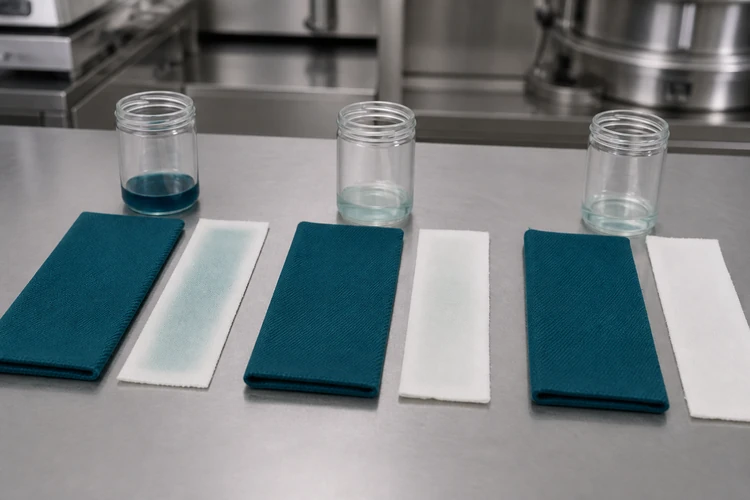
Migration becomes a concern whenever a colored plastic, film, or coating sits in direct or indirect contact with another material over time. A dye that migrates can bleed into adjacent layers, packaging contents, or surrounding surfaces, affecting both appearance and, in some cases, regulatory compliance.
Molecular Weight and Migration. Solvent dyes with higher molecular weight and lower solubility in the contacting medium generally show better migration resistance. This matters most in multilayer plastic films or packaging structures, where dye movement between layers can show up as discoloration or staining over time.
Testing Conditions. Migration behavior should be assessed under the temperature and humidity conditions the finished product will actually see. Results measured at room temperature do not reliably predict performance in warmer storage or transport environments, so testing under real-world conditions is essential before a grade is finalized.
For packaging destined for food-contact applications, migration testing is typically benchmarked against established frameworks such as the EU regulation on plastic materials intended for food contact. Colorants generally fall outside that regulation’s specific substance list, but they are still subject to its general safety requirements, so this remains a useful reference point when setting internal migration limits.

Solvent Dye Selection by Application
Once solubility, heat, light, and migration requirements are defined, the right solvent dye also depends on the specific application it will be used in.
Plastics
In plastics processing, common resins include polystyrene, ABS, acrylics, polycarbonate, and PET. Solvent dyes deliver transparent, uniform coloring that pigments cannot always match, especially in clear or lightly tinted parts.
Printing Inks
For flexographic, gravure, and inkjet printing ink applications, solvent dyes are typically selected for high clarity and vibrant, non-hazy color, which matters most for film and flexible packaging print work.
Coatings
For wood stains, aluminum foils, and industrial or automotive coatings, solvent dyes are chosen for bright, transparent color combined with the light and heat resistance needed for extended outdoor exposure.
Recommended Solvent Dye Grades
The Skysol solvent dye covers this application range with grades identified by Colour Index (C.I.) number, including Solvent Blue AP (C.I. 36), Solvent Blue GG (C.I. 78), Solvent Red 2B (C.I. 24), and Solvent Yellow RNB (C.I. 147), each suited to a different combination of shade, solubility, and thermal performance. Matching a specific grade to a project still comes down to the solubility, heat, light fastness, and migration factors covered above.
| Consideration | Key Question |
| Solubility | Does the dye fully dissolve in the target solvent system without residue? |
| Heat resistance | Can the dye withstand the peak processing or curing temperature? |
| Light fastness | Will the finished product face prolonged UV or outdoor exposure? |
| Migration resistance | Could the dye migrate into adjacent layers, contents, or surfaces? |
| Cost | Does the application justify a higher-performance anthraquinone grade, or is an azo dye sufficient? |
No single grade performs equally well across every solvent, resin, and exposure condition, so the right choice depends on testing against the exact conditions of a project rather than the general product category. For help narrowing down a specific Skysol grade by solvent system, processing temperature, or C.I. number, reach out to the technical team.
FAQs
Can solvent dyes and pigments be combined in the same formulation?
Yes, many plastics and coating formulations combine the two to balance transparency with opacity or specific visual effects. The solvent dye typically carries the shade and clarity, while the pigment contributes opacity, hiding power, or effects such as metallic or pearlescent finishes. Compatibility between the two should still be verified in the target resin or carrier system before scaling up production.
Which solvents suit gravure and flexographic inks?
The most common carriers are ketones such as MEK and acetone, and esters such as ethyl acetate and butyl acetate. Because solubility differs across individual dye grades even within the same solvent class, running a small-batch compatibility test with the exact carrier blend is the most reliable way to confirm performance before scaling up production.
How is thermal stability tested?
Thermal stability is typically assessed by processing the dye in the target resin at the intended processing temperature and checking for color shift, gas formation, or loss of clarity after molding or curing. Some formulators also run accelerated aging tests, holding the colored material at elevated temperature for a set period, to catch degradation that might not appear during a single processing pass.
What causes dye migration in packaging?
Migration occurs when a dye moves out of the material it was applied to and into an adjacent layer, contents, or surface. It is typically driven by heat, humidity, extended contact time, or the presence of solvents and plasticizers in the adjacent material. Dyes with higher molecular weight and lower solubility in the contacting medium tend to resist this movement better, which is why testing under real storage and transport conditions is an important step before finalizing a grade.
More reading: