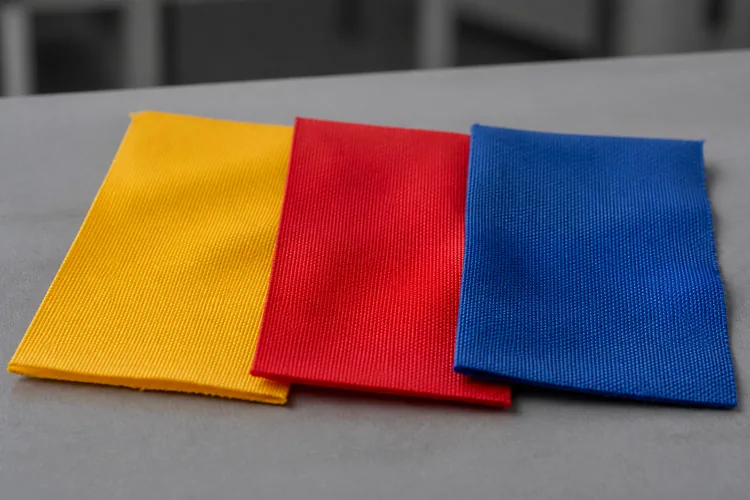
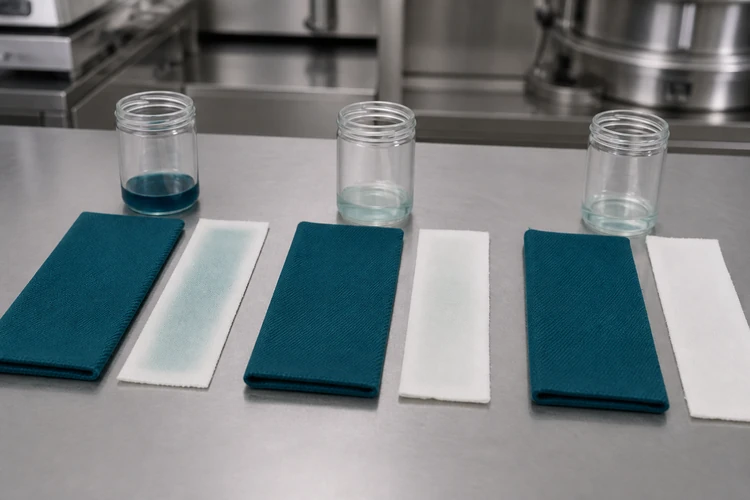
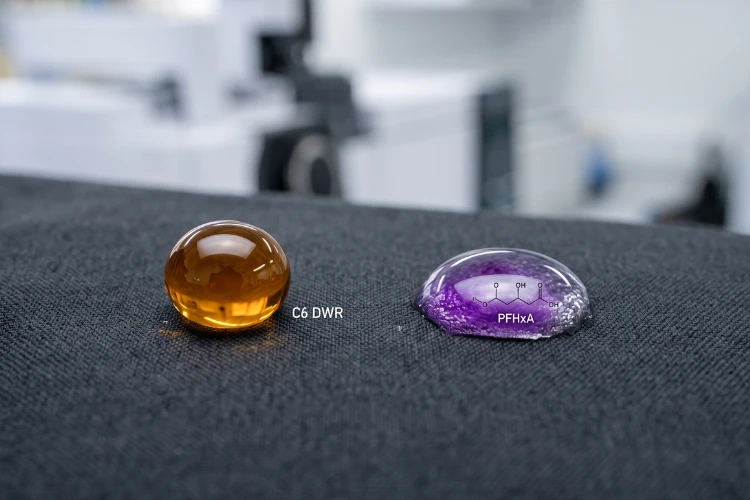
In textile wet processing, emulsifiers and surfactants do far more than “help things mix.” They influence wetting speed, bath stability, foam behavior, and, indirectly, shade consistency and reproducibility. AEO-9 is a widely used nonionic emulsifier that is often positioned as an APEO-free option. This guide explains what it is, why it matters, and how mills evaluate it in real production.

What is AEO-9?
Definition and EO number meaning
AEO-9 commonly refers to a fatty alcohol ethoxylate with an average of about 9 ethylene oxide (EO) units. In practical terms, “9” signals the hydrophilic portion level, which influences water solubility, HLB trend, wetting performance, and emulsification strength. Because AEO-9 is typically a distribution rather than a single pure molecule, quality indicators such as appearance, color, hydroxyl value, moisture, and pH are often used to monitor batch-to-batch consistency.
Why is it used as a nonionic emulsifier?
As a nonionic surfactant, AEO-9 is valued for broad compatibility and dependable emulsification across a wide range of formulations. It helps disperse and stabilize oils, waxes, and certain finishing components in aqueous systems. In textile auxiliaries, it is frequently used to support wetting and penetration, improve scouring efficiency, and stabilize emulsions where temperature swings or electrolytes might otherwise cause separation or haze. Final performance always depends on the full formulation and the mill’s process conditions, so validation in lab and pilot runs is recommended.
Why APEO-Free Matters
APEO-free matters because many textile supply chains and brands restrict APEOs as part of their chemical management and environmental requirements. Using an APEO-free surfactant helps mills reduce compliance risk, simplify supplier approvals, and meet common buyer expectations under programs such as the official ZDHC MRSL, especially for export-oriented production.
What mills and brands usually require
Before approving a surfactant for production, technical teams and buyers typically request clear scope statements and complete documentation. That usually includes confirmation of APEO-free status for the supplied material, key quality specifications that support stable batching, and safety and transport paperwork aligned with onsite chemical management. Beyond paperwork, the practical decision is driven by process outcomes such as wetting speed, emulsion stability, foam risk, and repeatability across seasonal temperature changes and varying water quality.
Mills looking for an APEO-free nonionic emulsifier often prefer suppliers that can support both performance validation and documentation readiness. Skychem Group positions its auxiliary portfolio around wet processing needs such as wetting, scouring, and emulsion stability, with technical support to help screen compatibility and minimize trial-and-error during scale-up. A practical starting point is Skychem Group’s textile auxiliary range, then narrowing to the specific emulsifier and the mill’s target conditions. Use emulsifier aeo-9 as the reference point when requesting recommendations for formulation fit, stability checks, and the documents needed for internal approvals or downstream customer audits.
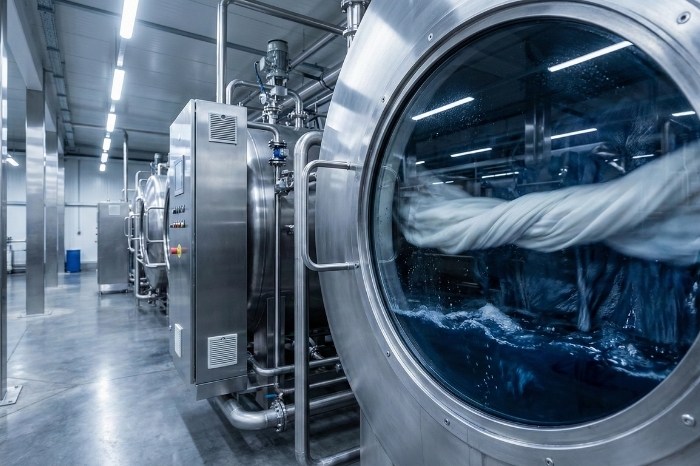
Key Textile Uses
Pretreatment wetting and scouring
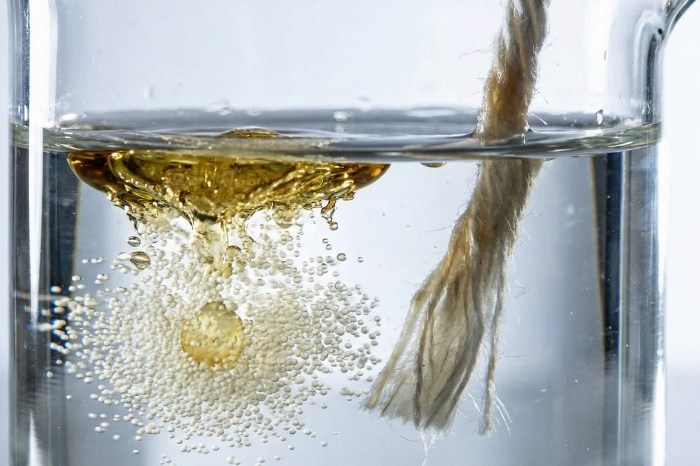
In pretreatment, an emulsifier like AEO-9 can help accelerate wetting and penetration, improving contact between the bath and the substrate. This can be especially useful when fabrics carry oils, spin finishes, or sizing residues. Improved wetting and emulsification can support more uniform scouring and reduce the risk of re-deposition during subsequent washing steps.
Emulsifying oils and silicone systems
AEO-9 is often used as a building block in emulsified systems that require stable dispersion of hydrophobic components. In practice, this can include emulsifying oils or supporting silicone-related systems where stability across temperature changes is important. The objective is to maintain a fine, stable emulsion to reduce separation risk and minimize surface defects linked to unstable emulsions.
Washing soaping and cleaning support
During washing and soaping, nonionic surfactants can contribute to removing unfixed residues and keeping soils dispersed. When combined appropriately with other surfactants, they can improve cleaning efficiency and help maintain bath clarity, which can be relevant when troubleshooting re-deposition, dullness, or uneven appearance after dyeing or finishing.
How to Judge Performance
Wetting and penetration
Wetting is typically judged by how quickly the fabric becomes uniformly wetted and how consistently that behavior repeats from batch to batch. A practical evaluation compares wetting time under the same water hardness, temperature, and agitation conditions used in production.
Emulsion stability across temperature
Temperature shifts can stress emulsions and reveal instability through clouding, separation, or viscosity drift. A production-relevant evaluation checks both low-temperature haze risk and high-temperature stability, including how the system behaves during cooling after a hot process step.
Hard water and electrolyte tolerance
Hard water ions and process electrolytes can destabilize some surfactant systems. In textile plants, this may show up as haze, separation, reduced wetting efficiency, or inconsistent cleaning performance. AEO-9 is commonly screened under local water conditions and in the presence of salts or other bath components used in the mill’s recipes.
Foam tendency and control
Foam is not only an operational nuisance. It can reduce productivity, interfere with dosing accuracy, and contribute to defects in sensitive processes. When evaluating AEO-9 in a formulation, teams typically consider foam height, foam persistence, and whether foam control measures work without destabilizing the system or causing spots.
Formulation Compatibility
Working with anionic systems
AEO-9 is often blended with anionic surfactants to balance wetting, detergency, and emulsification. The key is to validate stability under real bath conditions, especially where electrolytes and temperature changes can push a borderline system into haze or separation.
Working with cationic systems
Cationic systems are more sensitive in terms of compatibility, and not all surfactant combinations remain stable. If your formulation includes cationic components, compatibility screening should focus on whether the blend stays uniform, avoids flocculation, and maintains performance after aging or thermal cycling.
Common issues and quick fixes
Typical failure modes include separation after cooling, haze in hard water, excessive foam, and performance drift over time. Practical corrections often involve adjusting the nonionic-to-anionic balance, improving stabilization where appropriate, optimizing foam control, and tightening incoming QC specifications so raw material variability does not become a production variability problem.
Compliance Essentials
SDS TDS COA checklist
For industrial buyers, documentation is part of the deliverable. At minimum, SDS supports safe handling and risk assessment, TDS clarifies key properties and use guidance, and COA supports batch control and traceability. Having these documents ready streamlines onboarding and reduces delays during buyer qualification.
APEO-free statement and scope
An “APEO-free” claim should be written with a clear scope that matches how your customers define restricted substances. If you supply to brands or export-oriented mills, keep your internal declarations aligned with widely adopted chemical management expectations and ensure the supporting paperwork is consistent across sales, technical, and QA communication.
Conclusion
AEO-9 is a practical nonionic emulsifier option for textile auxiliaries where wetting, emulsification, and stability are important. The most meaningful evaluation focuses on real production variables such as temperature swings, water hardness, electrolytes, and foam behavior. With controlled specifications and complete documentation, it becomes much easier to scale performance reliably from lab to bulk production.
Fast pricing and a more accurate recommendation depend on a few process details such as substrate type, bath temperature range, water hardness, electrolyte level, and target outcomes like wetting speed or emulsion stability. Sharing these parameters also helps align any APEO-free and documentation expectations early in the discussion. Reach Skychem here to get an instant quote.
FAQs
Is AEO-9 the same as NP-9?
No. NP-9 typically refers to nonylphenol ethoxylate, which is an APEO. AEO-9 generally refers to an alcohol ethoxylate with about 9 EO units. They can behave similarly in some applications, but they are different chemistries and are treated differently in many restricted substance programs.
Why does CAS differ by supplier?
AEO-9 is usually a mixture with a distribution of alcohol chain lengths and EO numbers, not a single defined molecule. Different feedstocks and production routes can lead suppliers to list different CAS entries or identifiers, even when the market name is similar.
Will AEO-9 cause yellowing or shade change?
AEO-9 is not chosen for shade control, but indirect effects can occur if a formulation changes wetting, residue removal, or bath stability. If yellowing or shade drift appears, the normal approach is to check purity-related indicators, dosing, bath stability, and interactions with other auxiliaries, then confirm with controlled lab and pilot trials.
How to reduce foam in production?
Measure foam under your real temperature, water hardness, and agitation conditions, then address it systematically. Common steps include avoiding overdosing, adjusting surfactant balance, and adding a compatible defoamer package. Also check whether foam is being amplified by contaminants such as residual oils or unstable emulsions that trap air.
Recommended readings: