Contact Skychem Group for more chemical solutions, If you have questions or need more information, please contact us.
Respond within 24 hours

2026 Top 10 Textile Chemical Companies in the World

The textile chemicals industry is rapidly developing in 2026 due to sustainability, innovation, and rotating consumer preferences. These chemical solutions are critical in making fabrics durable, comfortable, and eco-friendly as they can be used in dyes and finishes, in performance enhancers, and in eco-friendly coatings. We can find out how the situation in global textile chemicals is now and who the leaders of it are.

The State of the World’s Textile Chemicals Industry in 2026

The global textile chemicals market is estimated to be more than $30 billion in 2026, with a continuous increase because of increasing demand for functional and sustainable textiles. As more organizations start paying attention to less toxic manufacturing processes, the production of textiles is collaborating with chemical manufacturers to design non-toxic dyes, biodegradable finishes, and water-efficient operations.

The issue of sustainability has taken centre stage in transforming the industry. European and North American regulations have enhanced the adoption of green chemistry. The Asian producers are increasing their production to match global demand with cost-effective and scalable solutions. This innovation and responsibility are the balance that determines the competitive context in 2026.

Global Map

Criteria for Ranking the Top Textile Chemical Companies Worldwide

When evaluating the top textile chemical companies in the world, several factors are considered. These include:

Innovation and R&D investment: particularly in sustainable chemistry.

Global Reach and Production Capacity: ensuring consistent supply.

Product Diversity: from dyes and auxiliaries to performance-enhancing agents.

Environmental Responsibility: compliance with REACH, ZDHC, and similar frameworks.

Customer Satisfaction and Technical Support: helping brands improve textile performance and quality.

The companies that have succeeded in these points are not only the leaders in the industry, but also the creators of the future of sustainable fashion and textile manufacturing.

Companies that prioritize R&D, sustainability, and certification are shaping the next phase of textile chemistry. Explore how Skychem Group aligns with these global standards.

Top Textile Chemical Companies in the World (2026 Update)

Below is a brief list of the world’s top 10 textile chemical companies based on market influence, innovation, and sustainability leadership:

Company Name Country Specialization
Skychem Group China Textile dyes & auxiliaries
Archroma Switzerland Sustainable dyes & specialty chemicals
DyStar Group Singapore/

Germany

Eco-friendly dyes & auxiliaries
CHT Group Germany Textile auxiliaries & silicone chemistry
Huntsman Textile Effects USA Performance finishes & colorants
Evonik Industries Germany Textile polymers & additives
BASF Germany Chemical innovation & finishing solutions
Tanatex Chemicals Netherlands Functional textile coatings
Pulcra Chemicals Germany Process auxiliaries & sustainability tech
Wacker Germany Silicone-based textile solutions

Skychem Group

Skychem Group is a comprehensive chemical solutions provider with nearly three decades of industry experience, serving over a thousand customers across more than 70 countries. The company produces pigments and auxiliaries and functional chemicals which enhance textile quality and performance.

The vision “Chemical Solutions for Blue Sky” leads Skychem Group to develop new technologies which produce environmentally friendly products. Through its dedication to operational efficiency and environmental responsibility the organization enables production of sustainable manufacturing methods which reduce environmental impact in textile and chemical sectors.

Archroma

Archroma is an international leader in color and specialty chemicals. Archroma produced environmentally friendly colorants that use less water and energy by adopting green technology in dyeing. The Planet Conscious strategy of the company makes its textiles functional and safe to the environment to contribute to the worldwide movement towards green fashion.

DyStar Group

The company is known as having a wide range of environmentally friendly dyes and textile auxiliaries. The firm is concerned with minimizing the environmental footprint of the processing of textiles through water management and low-impact dyeing. The high-end digital color solutions of DyStar also help to improve precision and uniformity among the fabric manufacturers across the world.

CHT Group

CHT Group, which is based in Germany, advocates a broad assortment of textile auxiliaries, silicones, and specialty chemicals. Their innovations make fabrics soft, elastic, and functional. CHT, with high emphasis on sustainability and compliance, will help brands create textiles that perform and meet green requirements.

Huntsman Textile Effects

Huntsman, a USA-based company, is a reputable company in high-performance dye and finishing technologies. Their textile unit provides cutting-edge services of durability, color brightness, and moisture control. Sustainable innovation has continued to be one of the core parts of the company that continues to make benchmarks in the apparel and home textile markets.

Evonik Industries

Evonik is a specialist in specialty chemicals for most industries, including the textile industry. Their products also increase fiber properties, which provide better softness, elasticity, and resilience. Circular chemistry is another focus of Evonik, where the company is creating raw materials that will cause less environmental impact and still have high quality.

BASF

BASF is currently one of the biggest chemical producers worldwide and can provide the textile industry with a whole range of services: dyes and finishing agents, fiber treatment technologies. With its continued initiative in innovative biodegradable and bio-based chemical solutions, BASF guarantees high performance at low cost to the environment.

Tanatex Chemicals

Tanatex specializes in performance, functional textile coating to enhance comfort, performance, and protection. Their formulations are sportswear, workwear, and technical textiles. Tanatex offers future-proof, smart, and safe chemical solutions to its customers with a view to sustainability and the circular production process.

Pulcra Chemicals

Pulcra Chemicals is a chemical company focused on performance-enhancing textile and leather textiles and auxiliaries. They have good chemistry that guarantees easy processing and good results. The R&D of Pulcra centers across the world continues to make innovations to achieve greater resource efficiencies and lower emissions.

Wacker

Wacker is known to be a silicone specialist. The products offered by the company enhance the softness of textiles and their durability and repel water. Another aspect that Wacker is concerned about is the development of energy-efficient and low-impact production processes, which are in line with the increasing popularity of the environmentally friendly production of textile products.

Regional Leaders

China, India, and Southeast Asia have, over the past few years, developed to become not only low-cost manufacturing hubs, but innovative locations in the development of textile-chemical. Suppliers in the region are putting large investments towards sustainable chemistry, increasing research and development, and gaining international certification (REACH, OEKO-TEX, ZDHC compliance) to conform to world brand quality requirements. These organizations provide competitive prices, local supply-chain benefits, and lead times to local mills, and also spearhead waterless-dyeing, bio-based auxiliaries, and wastewater-treatment technology.

China: The Chinese suppliers are the best alternatives due to large capacity, fast process innovation, and strong integration of the upstream chemicals, ideal in quantity and quick development of products.

As one of China’s leading innovators in textile chemistry, Skychem Group combines decades of manufacturing expertise with advanced R&D capabilities. The company operates integrated production facilities and laboratories across China, focusing on sustainable chemistry, water treatment technologies, and bio-based textile auxiliaries.

Skychem’s products reach the highest international standards because they have obtained REACH, OEKO-TEX, and ZDHC certifications, which meet worldwide brand compliance standards. The partnership enables organizations to access chemical manufacturing benefits through China’s upstream integration and Skychem’s dedication to delivering environmentally friendly solutions that produce steady supply chains and rapid development periods. Discover practical, certified options from a leading textile chemicals manufacturer.

India: Specialization in the auxiliaries and natural-fiber processing, with increased emphasis on green chemistry and compliance with export requirements.

Southeast Asia: Quick, cost-effective manufacturers with strategic access to the apparel manufacturers and increasing innovation in sustainable finishing and low-water technologies.
Top Textiles Companies Global

Conclusion

The 2026 top textile chemical companies are the best combination of innovation, performance, and environmental stewardship. The companies are defining new standards of safe, quality, and sustainable fashion and textile production as the fashion and textile industry keeps changing. Whether it is European giants or Asian up-and-comers, the future of textile chemistry is bright, cleaner, and smarter, and more efficient than ever.


Related reading:

  1. 2026 The Largest Textile Mills in the U.S.
  2. How to Select ZDHC-Compliant Textile Chemicals?

Sandy

With years of experience in chemical dyes and textile auxiliaries, I’m dedicated to sharing insights into the latest technologies, sustainable innovations, and market trends.

Recent Articles

Reduction Clearing in Polyester Dyeing: A Complete Guide

Table of Contents What Is Reduction Clearing? Definition and Purpose Role in Disperse Dyeing Impact on Colorfastness Common Quality Complaints When Reduction Clearing Is Needed Dark and Medium Shades High Dye Concentration Recipes Blends with Cellulosic Fibers When It Can Be Skipped Process and Control Typical Recipe and Parameters Controlling Temperature and pH Avoiding Over-Reduction or Under-Reduction Rinsing and Neutralization Choosing the Right Reducing Agents Sodium Hydrosulfite Sulfur-Free Reducing Agents Low-Temperature and Sustainable Options High Wash Fastness Dyes to Reduce Clearing Load Troubleshooting Common Issues Poor Wash Fastness After Clearing Shade Change or Dulling Conclusion FAQs What Happens If You Skip It? Reduction Clearing vs Normal Washing? Can It Be Done at Low Temperature? Hydrosulfite vs Sulfur-Free Agents? A batch that looks perfect on the machine can still fail a wash fastness test days later. More often than not, the cause is unfixed disperse dye left on the fiber surface, and the fix is reduction clearing. This guide covers when the step is necessary, the chemistry behind it, and how to keep results consistent from lab dip to bulk production. What Is Reduction Clearing? Definition and Purpose Reduction clearing is a post-dyeing treatment that removes disperse dye which has not penetrated or fixed onto polyester fibers. During high temperature dyeing, some dye molecules remain on the fiber surface instead of diffusing into the polymer structure. Left untreated, this residual dye rubs off and bleeds during washing, lowering overall color fastness. A reduction clearing bath breaks down and strips away the surface dye, leaving only the dye that has properly fixed inside the fiber. Role in Disperse Dyeing Reduction clearing takes place at the end of the disperse dyeing cycle, after the main dyeing stage and before final rinsing. It is one part of a larger polyester dyeing workflow that also includes pretreatment, dyeing, and finishing. The polyester dyeing application solutions page outlines how these stages connect, along with recommended auxiliaries for each step. Impact on Colorfastness Wash and rub fastness are among the specifications buyers check most closely before accepting a shipment. Surface dye that has not been cleared is loosely bound and washes out easily, which is precisely what standardized tests such as AATCC’s laundering fastness methods are designed to detect. A properly executed reduction clearing step improves these results by removing the dye that would otherwise cause a failed test. Common Quality Complaints Mills that skip or under-perform reduction clearing tend to see a recurring pattern of issues: Color bleeding onto lighter garments in the same wash load Staining on packaging or trims during transport and storage Dull or hazy shades compared to the approved lab dip Rejected shipments after failed fastness testing at the buyer’s lab These problems are almost always traceable to residual disperse dye rather than a flaw in the dye recipe itself, which is why reduction clearing deserves the same attention as the dyeing stage it follows. When Reduction Clearing Is Needed Dark and Medium Shades Darker and medium depth shades require higher dye concentrations, which naturally leaves more unfixed dye on the fiber surface. The Skycron disperse dyes range covers both dyeing and printing applications across dark, medium, and vivid shades, and pairing these dyes with a proper reduction clearing step is standard practice for reaching acceptable fastness at these heavier depths. High Dye Concentration Recipes Any recipe with a high total dye percentage on weight of fabric (% o.w.f.) benefits from reduction clearing, not only dark shades. As a general reference, mills commonly group shade depth this way: Shade Depth Typical Dye Concentration Reduction Clearing Light Below 1% o.w.f. Often optional Medium 1 to 3% o.w.f. Recommended Dark Above 3% o.w.f. Required These figures are a general guide rather than a fixed rule, since dye class, fiber blend, and fastness targets all shift the threshold. Multi-dye combinations used for precise custom shades fall into this same logic, as several dye classes combined can leave behind varying amounts of surface residue even at a moderate total percentage. Blends with Cellulosic Fibers Polyester-cotton and polyester-viscose blends add another layer of risk. Disperse dye that has not fixed to the polyester portion can stain the cellulosic fiber, causing an unwanted tone shift across the fabric. Reduction clearing protects the intended contrast or solid shade across both fiber types. When It Can Be Skipped Very light shades with low dye loading sometimes do not require a full reduction clearing cycle, particularly when high-exhaustion dyes and well-controlled dyeing conditions are used, and a simple hot wash can be enough. Skipping the step should still be a deliberate decision based on shade depth and fastness requirements, not a shortcut taken to save time. Process and Control Typical Recipe and Parameters A standard alkaline reduction clearing bath includes a reducing agent, caustic soda or soda ash, and a wetting or dispersing agent. Sulfur-free acid-clearing systems, which run at a lower pH, are increasingly used as an alternative. A general starting point looks like this: Parameter Typical Range Reducing agent 2 to 4 g/L Alkali (NaOH or soda ash) 2 to 4 g/L Temperature 70 to 80°C Time 15 to 20 minutes Liquor ratio 1:8 to 1:15 These figures vary by shade depth, dye class, and fiber blend, so lab trials should confirm the final recipe before scaling to bulk. Controlling Temperature and pH Temperature and pH are the two variables that most affect clearing efficiency: Too cool or too brief: residual dye is left behind, and fastness suffers. Too hot or too alkaline: the polyester surface or hand feel can be affected. Most conventional recipes target a mildly alkaline pH between 9 and 11. Acid-based sulfur-free systems instead work in a neutral to mildly acidic range, depending on the product used, so the pH target should always match the chemistry selected rather than a single fixed rule. Avoiding Over-Reduction or Under-Reduction Under-reduction leaves surface dye behind, which shows up later as poor fastness. Over-reduction strips properly fixed dye from the fiber, causing shade loss, dulling, or an uneven

Explore More »
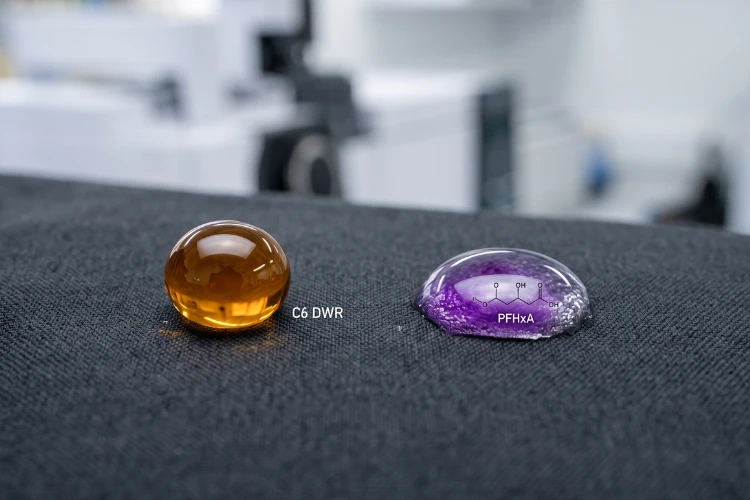
C0 vs. C6 Water Repellent Finishes

C0 vs. C6 Water Repellent Finishes: Which One Fits Your Textiles?

Table of Contents The Chemistry Behind C0 and C6 What is C6 DWR What is C0 DWR Key Structural Differences Performance Comparison Water and Oil Repellency Durability and Wash Resistance Breathability and Hand Feel Global Regulatory Landscape REACH and EU Restrictions US State Regulations Brand and Retailer Requirements Use Cases by Industry Outdoor and Sportswear Workwear and Protective Textiles Home Textiles and Upholstery Choosing the Right Finish Key Factors to Consider Testing and Certification Tips Conclusion FAQs What is the difference between C0 and C6 finishes? Is C6 DWR banned? Does C0 perform as well as C6? How do I choose between C0 and C6? Ask a fabric supplier for a water-repellent finish today, and there is a good chance you will get two very different answers: C6, or C0. Both claim to keep fabric dry. Only one is currently facing phase-out pressure from regulators in the EU, California, and New York, and from major apparel brands. For buyers sourcing water-repellent textiles right now, the choice is no longer just about performance. It is about which chemistry will still be sellable in your target market two years from now. The Chemistry Behind C0 and C6 What is C6 DWR C6 durable water repellent (DWR) finishes use short-chain fluorocarbon polymers, specifically six-carbon fluorinated side chains, to coat individual fibers. This chemistry lowers the surface energy of the fiber to roughly 12 mJ/m², which is below the surface tension of most water and oils. As a result, C6 finishes deliver both water and oil repellency, a combination that few fluorine-free systems can fully match. C6 chemistry replaced older C8 fluorotelomer finishes over a decade ago. C8 degrades into PFOA, a substance known for being persistent and bioaccumulative in the environment. C6 degrades into perfluorohexanoic acid (PFHxA) instead, which has a shorter environmental half-life and lower bioaccumulation potential. However, PFHxA is not free of regulatory scrutiny, as covered in the compliance section below. For buyers sourcing C6 products, formulations such as the Skyguard C6-C8 Waterproofer combine water and oil resistance with good wash fastness on both cellulose and synthetic fibers, applied at typical dosages of 10 to 40 g/L, and are produced without PFOS, PFOA, or APEO. What is C0 DWR C0 refers to fluorine-free water repellent chemistry. Instead of fluorocarbon side chains, C0 finishes rely on dendrimer, wax, or polyurethane-based polymers to build a hydrophobic fiber surface. These systems typically reach a surface energy of 20 to 25 mJ/m², which is sufficient to repel water effectively but generally not enough to provide strong oil repellency. Demand for C0 finishes is growing quickly because they carry no PFAS-related compliance risk, a factor that matters more each year as regulatory scope widens. Ranges such as the Skyguard Fluorine-free Waterproofer line are applied at roughly 10 to 80 g/L depending on the durability required, contain no APEO, and are built for fabrics where oil repellency is not a functional requirement, including most outerwear, home textiles, and fashion applications. Key Structural Differences Attribute C6 (Fluorocarbon) C0 (Fluorine-Free) Surface energy Approx. 12 mJ/m² Approx. 20 to 25 mJ/m² Water repellency Excellent Good to excellent Oil repellency Yes Limited or none PFAS content Present (PFHxA-based) None Typical curing temperature 150 to 160°C 160 to 180°C Performance Comparison Water and Oil Repellency C6 finishes remain the benchmark wherever oil, grease, or organic stain resistance is needed alongside water repellency, such as workwear exposed to machine oils or food-contact aprons. C0 finishes have closed most of the gap on pure water repellency, with many recent formulations achieving results comparable to C6 under standardized water resistance testing. On oil-based stains, however, C0 finishes still fall short. Durability and Wash Resistance Both chemistries rely on physical adsorption when first applied to the fabric, and this bond weakens progressively with repeated laundering and detergent exposure. A crosslinking agent extends wash durability by binding DWR polymer chains to each other and to reactive groups on the fiber surface, converting a loosely adsorbed coating into a chemically anchored one. The Sylic Cross-linking Agent, for example, is dosed in the same bath at 10 to 30 percent of the water repellent quantity, contains no APEO, PFOA, PFOS, or formaldehyde, and is compatible with both C6 and fluorine-free systems, making it a practical add-on when a finish needs to withstand 20 or more industrial or home wash cycles. Breathability and Hand Feel Both C0 and C6 finishes coat the fiber surface rather than filling the pore spaces between yarns, so breathability is generally preserved at correct application levels. Two factors most often compromise this balance: Overdosing the finish, which can partially block inter-yarn porosity and stiffen the fabric hand Uneven bath concentration, which creates localized high-add zones across the fabric width C0 finishes sometimes require slightly higher application levels to match C6 water repellency, which makes dosing accuracy and bath uniformity especially important for maintaining a soft, breathable result. Global Regulatory Landscape REACH and EU Restrictions The EU regulates PFAS in textiles under REACH Annex XVII. A restriction on PFHxA, the degradation product of C6 chemistry, takes effect in the EU and EEA from 2026, and a broader restriction covering the wider PFAS family is currently under evaluation by the European Chemicals Agency. Buyers and brands sourcing for the EU market should treat C6 as a chemistry under increasing regulatory pressure rather than a long-term safe option, and should monitor ECHA’s PFAS regulatory updates for the latest scope and timelines. US State Regulations Regulation is not limited to the EU. Two US states have already enacted PFAS restrictions specific to textiles and apparel: California AB 1817 bans the manufacture, distribution, and sale of new textile articles containing intentionally added PFAS above 100 ppm total organic fluorine as of January 1, 2025, dropping to 50 ppm from January 1, 2027. Outdoor apparel for severe wet conditions has an extension until January 1, 2028. The full requirements are set out in the official bill text. New York Environmental Conservation Law § 37-0121 prohibits the sale of new apparel

Explore More »
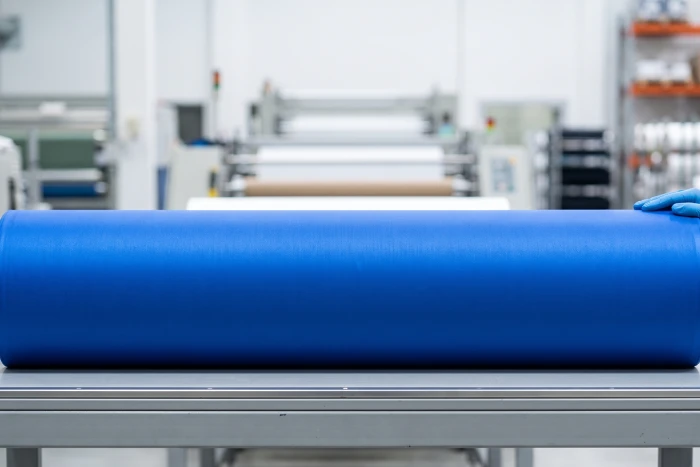
Finished royal blue nylon fabric roll.

Nylon Dyeing Defects: Causes and Process Fixes

Table of Contents Common Nylon Dyeing Defects Uneven Shade and Skitteriness Listing and Barre Ring, Tippy, and Frosty Effects The Three Levers Behind Every Defect pH Profile Heating Rate and Strike Zone Retarder Selection and Dosage Troubleshooting by Symptom Skychem Solutions for Nylon Dyeing FAQs What pH is best for nylon acid dyeing? Why does my nylon dye unevenly? How do retarders prevent uneven dyeing? What temperature should I dye nylon at? Nylon strikes fast. Acid dye bonds to its amino groups within minutes, so a slightly off process can lock in an uneven shade before it has any chance to level. Streaks, listing, barre, and a speckled, skittery surface on nylon almost always trace back to one of three controllable levers: pH, temperature, or the retarder system. This article covers how to recognize each defect and what to adjust in the process to prevent it from recurring. Common Nylon Dyeing Defects Naming a defect correctly is the first step toward fixing it. The three patterns below cover most of what shows up on nylon, and each one points to a different root cause. Uneven Shade and Skitteriness Uneven dyeing is the broad category: patches, blotches, or a shade that simply isn’t consistent across the fabric. Skitteriness is a more specific form of it, a speckled, grainy appearance where neighboring filaments take up dye at different rates. It is the clearest sign that the dye struck faster than the fiber could level out. Listing and Barre Listing is a side-to-center or selvage-to-middle shade difference across the width of the fabric. Barre appears as horizontal bars or streaks running with the courses or picks. What separates these two from skitteriness is the pattern: listing and barre follow a defined width-wise or length-wise direction, while skitteriness scatters at random. Ring, Tippy, and Frosty Effects Ring dyeing and tippy dyeing are related but distinct penetration faults, and it is worth telling them apart. Ring dyeing happens across the fiber’s cross-section: dye stays concentrated in the outer sheath and never fully diffuses to the core, so a cut filament shows a colored ring around a pale or white center even though the surface looks fully dyed. Tippy dyeing is a length-wise difference instead, where the tip of a filament or staple fiber picks up more, or less, dye than the body of the fiber, usually because the tip has a different heat history or surface condition than the rest of the fiber. Frosty effects show up as an overall pale, washed-out surface rather than a directional pattern. All three point back to the same underlying issue, dye that has not fully penetrated the fiber, even when the shade looks close to standard from a distance. The Three Levers Behind Every Defect Most nylon shade defects come down to pH, temperature, or the retarder system working against each other instead of together. Each lever below covers the mechanism, the typical failure mode, and the fix. pH Profile In an acidic bath, the amino groups at the ends of nylon’s polymer chains gain a proton and become positively charged, while the sulfonate groups on acid dye molecules carry a negative charge. The two attract and bond. pH determines how many of these sites are active, how fast the dye reaches them, and how firmly it holds once it does. The most common process error is lowering the bath pH too far or too soon. If the bath turns acidic before the goods are evenly wetted and circulating, the dye strikes in a rush and creates streaks or barre that no amount of time at temperature can correct. A pH that runs too high or drifts during the cycle has the opposite problem: weak exhaustion and shade depth that wanders from batch to batch. Different acid dye classes call for different pH windows: Leveling dyes: roughly pH 5.5 to 7.0, giving the dye room to migrate and self-correct Milling dyes  (a classification carried over from wool dyeing terminology, but standard practice for nylon as well): roughly pH 4.0 to 5.0, for deeper shades and stronger wet fastness, with less tolerance for process variation  These ranges are starting points. Confirm them against the dye supplier’s technical data sheet and in-house lab dips, and never carry a recipe over from wool, where the pH scheme for leveling and milling dyes runs in the opposite direction. The same caution applies within nylon itself: nylon 6 and nylon 6,6 can strike and build differently under identical pH and temperature conditions, and switching between substrates or dye suppliers on an unverified recipe is a common, avoidable source of shade drift. Confirm any change of fiber type or dye source with a fresh lab dip and pilot run before it reaches bulk. The fix is a repeatable pH curve rather than a single target value. A slow-acting acid donor that lowers pH gradually as temperature rises keeps the strike controlled instead of sudden, removing the guesswork of manual dosing at the wrong point in the cycle. Heating Rate and Strike Zone Temperature governs when the dye moves and how quickly. On nylon, most uptake happens in a narrow window, typically 70 to 90°C, where the fiber structure opens and dye rushes in. Nylon has a limited number of dye sites, and acid dye bonds to them almost as soon as conditions allow; ramping through the strike zone too fast fixes the dye unevenly, with no chance to level out afterward. The first ten to fifteen minutes of strike largely determine the outcome of the entire batch. The diagram above shows how this plays out across a typical cycle: a flat wetting and circulation stage, a controlled ramp that slows through the 70 to 90°C strike zone, a hold near boiling for migration and leveling, and a controlled cool down. The fix starts before the strike: confirm full, even wetting and steady circulation first. Ramp at a controlled rate, often close to 1°C per minute and slower still through the 70 to 90°C

Explore More »
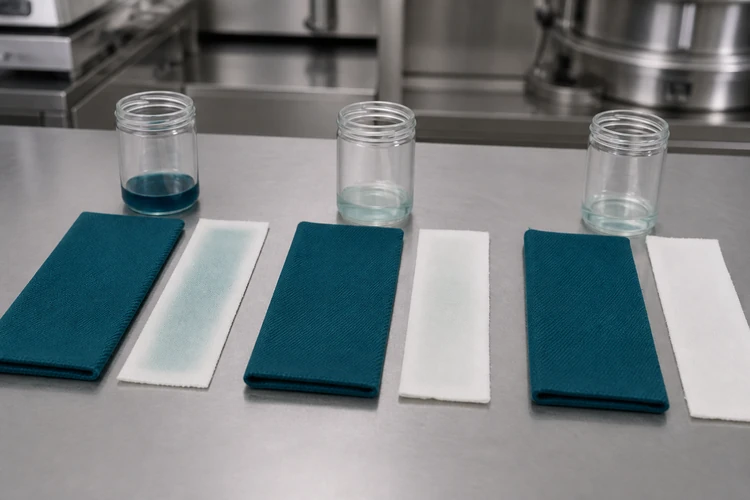
Filter paper test comparing even disperse dye dispersion and uneven aggregation

Troubleshooting Disperse Dye Baths: Spots, Sedimentation, and Shade Drift

Table of Contents What Bath Stability Means The Dispersed State of the Dye Three Failure Modes Spots and Specks Dye Aggregation Under Heat Dispersant Breakdown Hard Water and Electrolytes Sedimentation Crystal Growth and pH Drift Heating Too Fast Poor Liquor Circulation Poor Reproducibility Unstable Water and pH Dosing and Prep Errors Temperature Profile Variation Diagnose and Control Filter Paper Dispersion Test Stabilize pH and Water Choose the Right Leveling Agent Optimize the Heating Curve Conclusion Disperse dyeing looks straightforward on paper, but in practice it depends on something fragile. The bath is full of tiny dye particles that have to stay evenly suspended through hours of heat, pressure, and circulation. When that suspension holds, the result is clean, level, repeatable color. When it breaks down, the problems show up as spots on the fabric, sediment in the machine, and shades that refuse to match the last batch. This guide explains why disperse dye baths lose stability and how to catch and control each failure mode before it reaches the cloth. What Bath Stability Means The Dispersed State of the Dye Disperse dyes are almost insoluble in water. Instead of dissolving like a reactive or acid dye, they are milled into very fine particles and held in suspension by dispersing agents that coat each particle and keep it from clumping. The dye bath is therefore not a true solution. It is a dispersion, and its performance rises or falls with how well that dispersion survives the dyeing cycle. Stability means the particles stay fine, stay evenly distributed, and resist growing or sticking together. High temperature, high pressure, shear from pump circulation, and shifts in water chemistry all work against that goal, so bath stability is really about what keeps the particles apart and what makes them collapse together. Three Failure Modes Most disperse dyeing complaints that trace back to the bath fall into three recognizable patterns. They often share root causes, but each one looks different on the fabric and calls for a slightly different response. Failure mode What you see Core driver Spots and specks Darker pinpoints or blotches on the cloth Particles aggregate and deposit as concentrated points Sedimentation Dye settling, tar, or deposits in the bath and machine Particles grow or fall out of suspension Poor reproducibility Shade that drifts from batch to batch Bath conditions vary, so dye uptake varies The sections below break down the causes behind each pattern, then bring them together into a single diagnostic and control routine. Spots and Specks Dye Aggregation Under Heat Under high-temperature, high-pressure conditions, the kinetic energy of the dye particles rises sharply. They move faster, collide more often, and are far more likely to fuse into larger aggregates. An aggregate carries much more color than a single fine particle, so when it lands on the fabric it prints as a deeper, concentrated speck rather than blending into the overall shade. This is why spotting often appears only after the bath reaches peak temperature, even when everything looked fine during heating. Dispersant Breakdown The dispersing agents that keep particles apart are not indestructible. Long cycles, very high temperatures, or repeated reuse of a bath can degrade the dispersant and reduce its protective power. Dye stock that has been stored too long, diluted incorrectly, or held warm before use can arrive in the bath already weakened. Once the dispersant can no longer hold the particles in their fine state, aggregation and spotting follow quickly. Hard Water and Electrolytes Water chemistry decides whether particles stay apart or coagulate. Calcium and magnesium ions from hard water, along with high electrolyte loads, compress the electrical double layer surrounding each dye particle and reduce the electrostatic repulsion that keeps the dispersion stable. The particles can then approach closely enough to bond and grow. Controlling water hardness and avoiding unnecessary electrolyte additions are among the simplest and most effective ways to reduce speck formation. Sedimentation Crystal Growth and pH Drift Even a well-dispersed bath can develop sediment through crystal growth, where smaller particles gradually redeposit onto larger ones until they become heavy enough to settle. pH plays a large role here. Many disperse dyes, and ester-based structures such as those built on Disperse Blue 79 in particular, are sensitive to pH and can hydrolyze if the bath drifts outside the recommended window. A bath held around pH 4.5 to 5.5 generally protects dye stability and color yield, while a drifting pH accelerates both hydrolysis and sedimentation. Heating Too Fast A heating curve that rises too quickly pushes the bath through the temperature zone where dyes are most prone to aggregation before the particles have had time to distribute evenly. The result is localized over-concentration and precipitation. A controlled ramp gives the dispersion time to stay even and gives the dye time to move onto the fiber in an orderly way, rather than crashing out of suspension. Poor Liquor Circulation Sedimentation is not always a chemistry problem. Anywhere liquor moves slowly, particles are free to settle. Common culprits include: Dead zones in jet machines Overpacked beams or fabric rolls Weak or worn pump performance Uneven loading and an unsuitable liquor ratio Good circulation keeps the dispersion in motion and in contact with the fabric, so machine maintenance, correct loading, and an appropriate liquor ratio are part of bath stability just as much as the chemistry is. Poor Reproducibility Unstable Water and pH Reproducibility is the discipline of getting the same shade twice, and it is unusually sensitive to small changes in bath conditions. If incoming water hardness varies from one day to the next, or if pH is set differently between batches, dye exhaustion shifts and so does the final shade. Consistent buffering and consistent water treatment remove two of the largest sources of unexplained variation. Dosing and Prep Errors How the dye is prepared and added matters as much as how much is used. Inaccurate weighing, incomplete pre-dispersion of the dye paste, and inconsistent addition order all introduce variation that is hard to trace

Explore More »

Contact Us for Textile Auxiliaries and Dyes

Contact Skychem Group for more chemical solutions, If you have questions or need more information, please contact us.
We will respond within 24 hours

Get a project quote

Tell us your project requirements, country, and intended application.

Sandy

With years of experience in chemical dyes and textile auxiliaries, I’m dedicated to sharing insights into the latest technologies, sustainable innovations, and market trends.

Recent Articles

Reduction Clearing in Polyester Dyeing: A Complete Guide

Table of Contents What Is Reduction Clearing? Definition and Purpose Role in Disperse Dyeing Impact on Colorfastness Common Quality Complaints When Reduction Clearing Is Needed Dark and Medium Shades High Dye Concentration Recipes Blends with Cellulosic Fibers When It Can Be Skipped Process and Control Typical Recipe and Parameters Controlling Temperature and pH Avoiding Over-Reduction or Under-Reduction Rinsing and Neutralization Choosing the Right Reducing Agents Sodium Hydrosulfite Sulfur-Free Reducing Agents Low-Temperature and Sustainable Options High Wash Fastness Dyes to Reduce Clearing Load Troubleshooting Common Issues Poor Wash Fastness After Clearing Shade Change or Dulling Conclusion FAQs What Happens If You Skip It? Reduction Clearing vs Normal Washing? Can It Be Done at Low Temperature? Hydrosulfite vs Sulfur-Free Agents? A batch that looks perfect on the machine can still fail a wash fastness test days later. More often than not, the cause is unfixed disperse dye left on the fiber surface, and the fix is reduction clearing. This guide covers when the step is necessary, the chemistry behind it, and how to keep results consistent from lab dip to bulk production. What Is Reduction Clearing? Definition and Purpose Reduction clearing is a post-dyeing treatment that removes disperse dye which has not penetrated or fixed onto polyester fibers. During high temperature dyeing, some dye molecules remain on the fiber surface instead of diffusing into the polymer structure. Left untreated, this residual dye rubs off and bleeds during washing, lowering overall color fastness. A reduction clearing bath breaks down and strips away the surface dye, leaving only the dye that has properly fixed inside the fiber. Role in Disperse Dyeing Reduction clearing takes place at the end of the disperse dyeing cycle, after the main dyeing stage and before final rinsing. It is one part of a larger polyester dyeing workflow that also includes pretreatment, dyeing, and finishing. The polyester dyeing application solutions page outlines how these stages connect, along with recommended auxiliaries for each step. Impact on Colorfastness Wash and rub fastness are among the specifications buyers check most closely before accepting a shipment. Surface dye that has not been cleared is loosely bound and washes out easily, which is precisely what standardized tests such as AATCC’s laundering fastness methods are designed to detect. A properly executed reduction clearing step improves these results by removing the dye that would otherwise cause a failed test. Common Quality Complaints Mills that skip or under-perform reduction clearing tend to see a recurring pattern of issues: Color bleeding onto lighter garments in the same wash load Staining on packaging or trims during transport and storage Dull or hazy shades compared to the approved lab dip Rejected shipments after failed fastness testing at the buyer’s lab These problems are almost always traceable to residual disperse dye rather than a flaw in the dye recipe itself, which is why reduction clearing deserves the same attention as the dyeing stage it follows. When Reduction Clearing Is Needed Dark and Medium Shades Darker and medium depth shades require higher dye concentrations, which naturally leaves more unfixed dye on the fiber surface. The Skycron disperse dyes range covers both dyeing and printing applications across dark, medium, and vivid shades, and pairing these dyes with a proper reduction clearing step is standard practice for reaching acceptable fastness at these heavier depths. High Dye Concentration Recipes Any recipe with a high total dye percentage on weight of fabric (% o.w.f.) benefits from reduction clearing, not only dark shades. As a general reference, mills commonly group shade depth this way: Shade Depth Typical Dye Concentration Reduction Clearing Light Below 1% o.w.f. Often optional Medium 1 to 3% o.w.f. Recommended Dark Above 3% o.w.f. Required These figures are a general guide rather than a fixed rule, since dye class, fiber blend, and fastness targets all shift the threshold. Multi-dye combinations used for precise custom shades fall into this same logic, as several dye classes combined can leave behind varying amounts of surface residue even at a moderate total percentage. Blends with Cellulosic Fibers Polyester-cotton and polyester-viscose blends add another layer of risk. Disperse dye that has not fixed to the polyester portion can stain the cellulosic fiber, causing an unwanted tone shift across the fabric. Reduction clearing protects the intended contrast or solid shade across both fiber types. When It Can Be Skipped Very light shades with low dye loading sometimes do not require a full reduction clearing cycle, particularly when high-exhaustion dyes and well-controlled dyeing conditions are used, and a simple hot wash can be enough. Skipping the step should still be a deliberate decision based on shade depth and fastness requirements, not a shortcut taken to save time. Process and Control Typical Recipe and Parameters A standard alkaline reduction clearing bath includes a reducing agent, caustic soda or soda ash, and a wetting or dispersing agent. Sulfur-free acid-clearing systems, which run at a lower pH, are increasingly used as an alternative. A general starting point looks like this: Parameter Typical Range Reducing agent 2 to 4 g/L Alkali (NaOH or soda ash) 2 to 4 g/L Temperature 70 to 80°C Time 15 to 20 minutes Liquor ratio 1:8 to 1:15 These figures vary by shade depth, dye class, and fiber blend, so lab trials should confirm the final recipe before scaling to bulk. Controlling Temperature and pH Temperature and pH are the two variables that most affect clearing efficiency: Too cool or too brief: residual dye is left behind, and fastness suffers. Too hot or too alkaline: the polyester surface or hand feel can be affected. Most conventional recipes target a mildly alkaline pH between 9 and 11. Acid-based sulfur-free systems instead work in a neutral to mildly acidic range, depending on the product used, so the pH target should always match the chemistry selected rather than a single fixed rule. Avoiding Over-Reduction or Under-Reduction Under-reduction leaves surface dye behind, which shows up later as poor fastness. Over-reduction strips properly fixed dye from the fiber, causing shade loss, dulling, or an uneven

Explore More »
C0 vs. C6 Water Repellent Finishes

C0 vs. C6 Water Repellent Finishes: Which One Fits Your Textiles?

Table of Contents The Chemistry Behind C0 and C6 What is C6 DWR What is C0 DWR Key Structural Differences Performance Comparison Water and Oil Repellency Durability and Wash Resistance Breathability and Hand Feel Global Regulatory Landscape REACH and EU Restrictions US State Regulations Brand and Retailer Requirements Use Cases by Industry Outdoor and Sportswear Workwear and Protective Textiles Home Textiles and Upholstery Choosing the Right Finish Key Factors to Consider Testing and Certification Tips Conclusion FAQs What is the difference between C0 and C6 finishes? Is C6 DWR banned? Does C0 perform as well as C6? How do I choose between C0 and C6? Ask a fabric supplier for a water-repellent finish today, and there is a good chance you will get two very different answers: C6, or C0. Both claim to keep fabric dry. Only one is currently facing phase-out pressure from regulators in the EU, California, and New York, and from major apparel brands. For buyers sourcing water-repellent textiles right now, the choice is no longer just about performance. It is about which chemistry will still be sellable in your target market two years from now. The Chemistry Behind C0 and C6 What is C6 DWR C6 durable water repellent (DWR) finishes use short-chain fluorocarbon polymers, specifically six-carbon fluorinated side chains, to coat individual fibers. This chemistry lowers the surface energy of the fiber to roughly 12 mJ/m², which is below the surface tension of most water and oils. As a result, C6 finishes deliver both water and oil repellency, a combination that few fluorine-free systems can fully match. C6 chemistry replaced older C8 fluorotelomer finishes over a decade ago. C8 degrades into PFOA, a substance known for being persistent and bioaccumulative in the environment. C6 degrades into perfluorohexanoic acid (PFHxA) instead, which has a shorter environmental half-life and lower bioaccumulation potential. However, PFHxA is not free of regulatory scrutiny, as covered in the compliance section below. For buyers sourcing C6 products, formulations such as the Skyguard C6-C8 Waterproofer combine water and oil resistance with good wash fastness on both cellulose and synthetic fibers, applied at typical dosages of 10 to 40 g/L, and are produced without PFOS, PFOA, or APEO. What is C0 DWR C0 refers to fluorine-free water repellent chemistry. Instead of fluorocarbon side chains, C0 finishes rely on dendrimer, wax, or polyurethane-based polymers to build a hydrophobic fiber surface. These systems typically reach a surface energy of 20 to 25 mJ/m², which is sufficient to repel water effectively but generally not enough to provide strong oil repellency. Demand for C0 finishes is growing quickly because they carry no PFAS-related compliance risk, a factor that matters more each year as regulatory scope widens. Ranges such as the Skyguard Fluorine-free Waterproofer line are applied at roughly 10 to 80 g/L depending on the durability required, contain no APEO, and are built for fabrics where oil repellency is not a functional requirement, including most outerwear, home textiles, and fashion applications. Key Structural Differences Attribute C6 (Fluorocarbon) C0 (Fluorine-Free) Surface energy Approx. 12 mJ/m² Approx. 20 to 25 mJ/m² Water repellency Excellent Good to excellent Oil repellency Yes Limited or none PFAS content Present (PFHxA-based) None Typical curing temperature 150 to 160°C 160 to 180°C Performance Comparison Water and Oil Repellency C6 finishes remain the benchmark wherever oil, grease, or organic stain resistance is needed alongside water repellency, such as workwear exposed to machine oils or food-contact aprons. C0 finishes have closed most of the gap on pure water repellency, with many recent formulations achieving results comparable to C6 under standardized water resistance testing. On oil-based stains, however, C0 finishes still fall short. Durability and Wash Resistance Both chemistries rely on physical adsorption when first applied to the fabric, and this bond weakens progressively with repeated laundering and detergent exposure. A crosslinking agent extends wash durability by binding DWR polymer chains to each other and to reactive groups on the fiber surface, converting a loosely adsorbed coating into a chemically anchored one. The Sylic Cross-linking Agent, for example, is dosed in the same bath at 10 to 30 percent of the water repellent quantity, contains no APEO, PFOA, PFOS, or formaldehyde, and is compatible with both C6 and fluorine-free systems, making it a practical add-on when a finish needs to withstand 20 or more industrial or home wash cycles. Breathability and Hand Feel Both C0 and C6 finishes coat the fiber surface rather than filling the pore spaces between yarns, so breathability is generally preserved at correct application levels. Two factors most often compromise this balance: Overdosing the finish, which can partially block inter-yarn porosity and stiffen the fabric hand Uneven bath concentration, which creates localized high-add zones across the fabric width C0 finishes sometimes require slightly higher application levels to match C6 water repellency, which makes dosing accuracy and bath uniformity especially important for maintaining a soft, breathable result. Global Regulatory Landscape REACH and EU Restrictions The EU regulates PFAS in textiles under REACH Annex XVII. A restriction on PFHxA, the degradation product of C6 chemistry, takes effect in the EU and EEA from 2026, and a broader restriction covering the wider PFAS family is currently under evaluation by the European Chemicals Agency. Buyers and brands sourcing for the EU market should treat C6 as a chemistry under increasing regulatory pressure rather than a long-term safe option, and should monitor ECHA’s PFAS regulatory updates for the latest scope and timelines. US State Regulations Regulation is not limited to the EU. Two US states have already enacted PFAS restrictions specific to textiles and apparel: California AB 1817 bans the manufacture, distribution, and sale of new textile articles containing intentionally added PFAS above 100 ppm total organic fluorine as of January 1, 2025, dropping to 50 ppm from January 1, 2027. Outdoor apparel for severe wet conditions has an extension until January 1, 2028. The full requirements are set out in the official bill text. New York Environmental Conservation Law § 37-0121 prohibits the sale of new apparel

Explore More »
Finished royal blue nylon fabric roll.

Nylon Dyeing Defects: Causes and Process Fixes

Table of Contents Common Nylon Dyeing Defects Uneven Shade and Skitteriness Listing and Barre Ring, Tippy, and Frosty Effects The Three Levers Behind Every Defect pH Profile Heating Rate and Strike Zone Retarder Selection and Dosage Troubleshooting by Symptom Skychem Solutions for Nylon Dyeing FAQs What pH is best for nylon acid dyeing? Why does my nylon dye unevenly? How do retarders prevent uneven dyeing? What temperature should I dye nylon at? Nylon strikes fast. Acid dye bonds to its amino groups within minutes, so a slightly off process can lock in an uneven shade before it has any chance to level. Streaks, listing, barre, and a speckled, skittery surface on nylon almost always trace back to one of three controllable levers: pH, temperature, or the retarder system. This article covers how to recognize each defect and what to adjust in the process to prevent it from recurring. Common Nylon Dyeing Defects Naming a defect correctly is the first step toward fixing it. The three patterns below cover most of what shows up on nylon, and each one points to a different root cause. Uneven Shade and Skitteriness Uneven dyeing is the broad category: patches, blotches, or a shade that simply isn’t consistent across the fabric. Skitteriness is a more specific form of it, a speckled, grainy appearance where neighboring filaments take up dye at different rates. It is the clearest sign that the dye struck faster than the fiber could level out. Listing and Barre Listing is a side-to-center or selvage-to-middle shade difference across the width of the fabric. Barre appears as horizontal bars or streaks running with the courses or picks. What separates these two from skitteriness is the pattern: listing and barre follow a defined width-wise or length-wise direction, while skitteriness scatters at random. Ring, Tippy, and Frosty Effects Ring dyeing and tippy dyeing are related but distinct penetration faults, and it is worth telling them apart. Ring dyeing happens across the fiber’s cross-section: dye stays concentrated in the outer sheath and never fully diffuses to the core, so a cut filament shows a colored ring around a pale or white center even though the surface looks fully dyed. Tippy dyeing is a length-wise difference instead, where the tip of a filament or staple fiber picks up more, or less, dye than the body of the fiber, usually because the tip has a different heat history or surface condition than the rest of the fiber. Frosty effects show up as an overall pale, washed-out surface rather than a directional pattern. All three point back to the same underlying issue, dye that has not fully penetrated the fiber, even when the shade looks close to standard from a distance. The Three Levers Behind Every Defect Most nylon shade defects come down to pH, temperature, or the retarder system working against each other instead of together. Each lever below covers the mechanism, the typical failure mode, and the fix. pH Profile In an acidic bath, the amino groups at the ends of nylon’s polymer chains gain a proton and become positively charged, while the sulfonate groups on acid dye molecules carry a negative charge. The two attract and bond. pH determines how many of these sites are active, how fast the dye reaches them, and how firmly it holds once it does. The most common process error is lowering the bath pH too far or too soon. If the bath turns acidic before the goods are evenly wetted and circulating, the dye strikes in a rush and creates streaks or barre that no amount of time at temperature can correct. A pH that runs too high or drifts during the cycle has the opposite problem: weak exhaustion and shade depth that wanders from batch to batch. Different acid dye classes call for different pH windows: Leveling dyes: roughly pH 5.5 to 7.0, giving the dye room to migrate and self-correct Milling dyes  (a classification carried over from wool dyeing terminology, but standard practice for nylon as well): roughly pH 4.0 to 5.0, for deeper shades and stronger wet fastness, with less tolerance for process variation  These ranges are starting points. Confirm them against the dye supplier’s technical data sheet and in-house lab dips, and never carry a recipe over from wool, where the pH scheme for leveling and milling dyes runs in the opposite direction. The same caution applies within nylon itself: nylon 6 and nylon 6,6 can strike and build differently under identical pH and temperature conditions, and switching between substrates or dye suppliers on an unverified recipe is a common, avoidable source of shade drift. Confirm any change of fiber type or dye source with a fresh lab dip and pilot run before it reaches bulk. The fix is a repeatable pH curve rather than a single target value. A slow-acting acid donor that lowers pH gradually as temperature rises keeps the strike controlled instead of sudden, removing the guesswork of manual dosing at the wrong point in the cycle. Heating Rate and Strike Zone Temperature governs when the dye moves and how quickly. On nylon, most uptake happens in a narrow window, typically 70 to 90°C, where the fiber structure opens and dye rushes in. Nylon has a limited number of dye sites, and acid dye bonds to them almost as soon as conditions allow; ramping through the strike zone too fast fixes the dye unevenly, with no chance to level out afterward. The first ten to fifteen minutes of strike largely determine the outcome of the entire batch. The diagram above shows how this plays out across a typical cycle: a flat wetting and circulation stage, a controlled ramp that slows through the 70 to 90°C strike zone, a hold near boiling for migration and leveling, and a controlled cool down. The fix starts before the strike: confirm full, even wetting and steady circulation first. Ramp at a controlled rate, often close to 1°C per minute and slower still through the 70 to 90°C

Explore More »
Filter paper test comparing even disperse dye dispersion and uneven aggregation

Troubleshooting Disperse Dye Baths: Spots, Sedimentation, and Shade Drift

Table of Contents What Bath Stability Means The Dispersed State of the Dye Three Failure Modes Spots and Specks Dye Aggregation Under Heat Dispersant Breakdown Hard Water and Electrolytes Sedimentation Crystal Growth and pH Drift Heating Too Fast Poor Liquor Circulation Poor Reproducibility Unstable Water and pH Dosing and Prep Errors Temperature Profile Variation Diagnose and Control Filter Paper Dispersion Test Stabilize pH and Water Choose the Right Leveling Agent Optimize the Heating Curve Conclusion Disperse dyeing looks straightforward on paper, but in practice it depends on something fragile. The bath is full of tiny dye particles that have to stay evenly suspended through hours of heat, pressure, and circulation. When that suspension holds, the result is clean, level, repeatable color. When it breaks down, the problems show up as spots on the fabric, sediment in the machine, and shades that refuse to match the last batch. This guide explains why disperse dye baths lose stability and how to catch and control each failure mode before it reaches the cloth. What Bath Stability Means The Dispersed State of the Dye Disperse dyes are almost insoluble in water. Instead of dissolving like a reactive or acid dye, they are milled into very fine particles and held in suspension by dispersing agents that coat each particle and keep it from clumping. The dye bath is therefore not a true solution. It is a dispersion, and its performance rises or falls with how well that dispersion survives the dyeing cycle. Stability means the particles stay fine, stay evenly distributed, and resist growing or sticking together. High temperature, high pressure, shear from pump circulation, and shifts in water chemistry all work against that goal, so bath stability is really about what keeps the particles apart and what makes them collapse together. Three Failure Modes Most disperse dyeing complaints that trace back to the bath fall into three recognizable patterns. They often share root causes, but each one looks different on the fabric and calls for a slightly different response. Failure mode What you see Core driver Spots and specks Darker pinpoints or blotches on the cloth Particles aggregate and deposit as concentrated points Sedimentation Dye settling, tar, or deposits in the bath and machine Particles grow or fall out of suspension Poor reproducibility Shade that drifts from batch to batch Bath conditions vary, so dye uptake varies The sections below break down the causes behind each pattern, then bring them together into a single diagnostic and control routine. Spots and Specks Dye Aggregation Under Heat Under high-temperature, high-pressure conditions, the kinetic energy of the dye particles rises sharply. They move faster, collide more often, and are far more likely to fuse into larger aggregates. An aggregate carries much more color than a single fine particle, so when it lands on the fabric it prints as a deeper, concentrated speck rather than blending into the overall shade. This is why spotting often appears only after the bath reaches peak temperature, even when everything looked fine during heating. Dispersant Breakdown The dispersing agents that keep particles apart are not indestructible. Long cycles, very high temperatures, or repeated reuse of a bath can degrade the dispersant and reduce its protective power. Dye stock that has been stored too long, diluted incorrectly, or held warm before use can arrive in the bath already weakened. Once the dispersant can no longer hold the particles in their fine state, aggregation and spotting follow quickly. Hard Water and Electrolytes Water chemistry decides whether particles stay apart or coagulate. Calcium and magnesium ions from hard water, along with high electrolyte loads, compress the electrical double layer surrounding each dye particle and reduce the electrostatic repulsion that keeps the dispersion stable. The particles can then approach closely enough to bond and grow. Controlling water hardness and avoiding unnecessary electrolyte additions are among the simplest and most effective ways to reduce speck formation. Sedimentation Crystal Growth and pH Drift Even a well-dispersed bath can develop sediment through crystal growth, where smaller particles gradually redeposit onto larger ones until they become heavy enough to settle. pH plays a large role here. Many disperse dyes, and ester-based structures such as those built on Disperse Blue 79 in particular, are sensitive to pH and can hydrolyze if the bath drifts outside the recommended window. A bath held around pH 4.5 to 5.5 generally protects dye stability and color yield, while a drifting pH accelerates both hydrolysis and sedimentation. Heating Too Fast A heating curve that rises too quickly pushes the bath through the temperature zone where dyes are most prone to aggregation before the particles have had time to distribute evenly. The result is localized over-concentration and precipitation. A controlled ramp gives the dispersion time to stay even and gives the dye time to move onto the fiber in an orderly way, rather than crashing out of suspension. Poor Liquor Circulation Sedimentation is not always a chemistry problem. Anywhere liquor moves slowly, particles are free to settle. Common culprits include: Dead zones in jet machines Overpacked beams or fabric rolls Weak or worn pump performance Uneven loading and an unsuitable liquor ratio Good circulation keeps the dispersion in motion and in contact with the fabric, so machine maintenance, correct loading, and an appropriate liquor ratio are part of bath stability just as much as the chemistry is. Poor Reproducibility Unstable Water and pH Reproducibility is the discipline of getting the same shade twice, and it is unusually sensitive to small changes in bath conditions. If incoming water hardness varies from one day to the next, or if pH is set differently between batches, dye exhaustion shifts and so does the final shade. Consistent buffering and consistent water treatment remove two of the largest sources of unexplained variation. Dosing and Prep Errors How the dye is prepared and added matters as much as how much is used. Inaccurate weighing, incomplete pre-dispersion of the dye paste, and inconsistent addition order all introduce variation that is hard to trace

Explore More »

Contact Us for Textile Auxiliaries and Dyes

Contact Skychem Group for more chemical solutions, If you have questions or need more information, please contact us.
We will respond within 24 hours

Get a project quote

Please tell us the requirements, the country and the application.

Scroll to Top
Email WhatsApp

Contact Us for Textile Auxiliaries and Dyes

Contact Skychem Group for more chemical solutions, If you have questions or need more information, please contact us.
We will respond within 24 hours