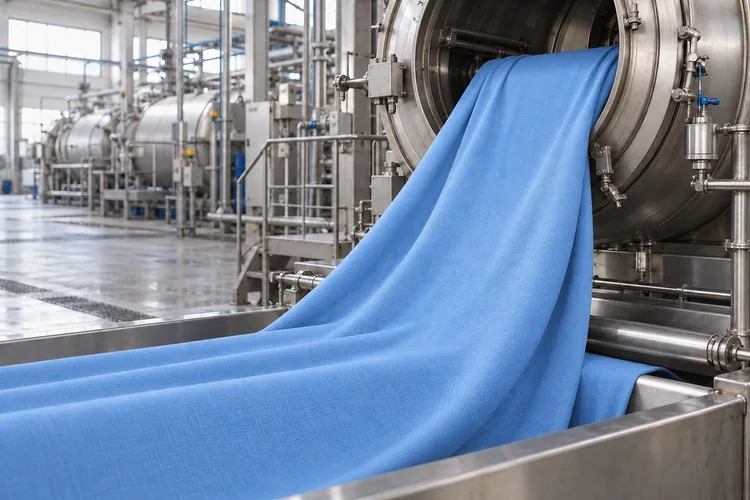
Textile coating adds a functional layer to fabric for applications ranging from rainwear to blackout curtains and industrial covers. The right result depends on more than the coating chemical. Fabric construction, surface preparation, application method, and curing all affect how the finished material performs.
This guide explains how to select those elements and turn a successful sample into a repeatable production specification.
What Is Textile Coating?
Textile coating applies a formulation to fabric and then dries or cures it to form a functional layer. Depending on the system, that layer can improve resistance to water penetration, block light, change the surface appearance, or protect against wear.
Coating falls within the broader field of textile finishing. The distinction matters when specifying performance: a water-repellent finish can reduce surface wetting without forming the continuous barrier expected of some coatings. Other textile finishing methods may be used alongside coating, provided the complete process is tested for compatibility.
Which Fabrics Can Be Coated?
Fiber type matters, but construction, porosity, stretch, and surface condition also determine how a coating spreads and adheres.
| Fabric | Main coating considerations | Common uses |
| Polyester | A stable, even construction can help control coverage. Remove processing residues and verify adhesion. | Bags, outdoor gear, upholstery |
| Nylon | Flexibility suits products that bend or fold. Check adhesion after repeated flexing. | Outerwear, tents, technical fabrics |
| Cotton and cotton blends | Absorbency and surface fibers can affect penetration and coating uniformity. | Home textiles, protective covers |
| Knitted and nonwoven fabrics | Stretch or porosity may make continuous coverage more difficult. | Stretch goods, specialty textiles |
A tightly woven fabric may be easier to coat evenly than an open or highly textured one. More porous fabrics may require a different formulation, application method, or number of passes.
Surface preparation should match the residues present on the production fabric. For example, Sylic P1410 alkali-resistant wetting agent is listed as an anionic, water-soluble pretreatment product with 70% solids. Its stated uses include penetration and cleaning during textile preparation. It is relevant where that pretreatment function is needed, but it is not a coating binder or a substitute for checking adhesion on the prepared fabric.

Which Chemicals Are Used?
The coating polymer provides the basis for the finished layer. Its actual performance depends on the formulation, application weight, and curing conditions.
- Polyurethane (PU): Commonly considered when flexibility and film durability are priorities.
- Acrylic: Can be formulated for different surface appearances and balances of flexibility and durability.
- Silicone: May suit applications requiring a flexible layer or particular surface properties. Adhesion to the selected fabric must be verified.
- PVC: Can form a substantial protective layer. Weight, hand, and flexibility should be assessed against the end use.
No chemistry is automatically the best choice for every fabric. Compare candidate systems on the intended substrate using the same performance targets.
Formulations can also include thickeners to control flow, wetting agents to help application, and defoamers to limit air bubbles. Some systems require crosslinkers. Select these ingredients as part of the complete formulation because changes can affect stability, film formation, and finished-fabric performance.
Color in the fabric and coating
Dyes generally color the textile substrate before coating. Pigments can color the coating layer when used in a compatible binder system. For a black coating, Skyprint Black T501 pigment paste is specifically listed for textile coating and has a stated 42% pigment content. That figure helps formulators compare colorant concentration, but the required dosage, shade, dispersion stability, and fastness must be established in the actual coating recipe.

How Is Coating Applied?
Application equipment must deliver the target layer consistently on the selected fabric.
| Method | How it works | Main controls |
| Knife coating | A blade meters formulation directly onto moving fabric. | Blade gap, viscosity, tension |
| Roll coating | Rollers transfer and meter the formulation. | Roll settings, pickup, coverage |
| Transfer coating | A layer forms on release material before bonding to fabric. | Film formation, bonding, release |
| Dip application | Fabric passes through a formulation bath. | Penetration, wet pickup |
| Foam or spray application | Equipment distributes formulation as foam or spray. | Delivery rate, widthwise uniformity |
Direct methods depend heavily on fabric surface consistency. Transfer coating can help form a controlled surface when direct application is difficult. Dip application allows more penetration into the fabric structure, which may be useful or undesirable depending on the product.
For each trial, record the fabric specification, formulation, machine settings, and dry coating weight. These details connect test results to a process that can be repeated.
How Is Performance Controlled?
Begin with measurable requirements. Terms such as waterproof, durable, and breathable need an agreed test method and acceptance level before they can guide production.
Monitor four areas:
- Substrate: Confirm that preparation and surface condition are consistent.
- Formulation: Check viscosity and stability during the production run.
- Application: Measure coating weight and inspect coverage across the fabric width.
- Drying and curing: Follow the formulation’s specified conditions and verify the finished result.
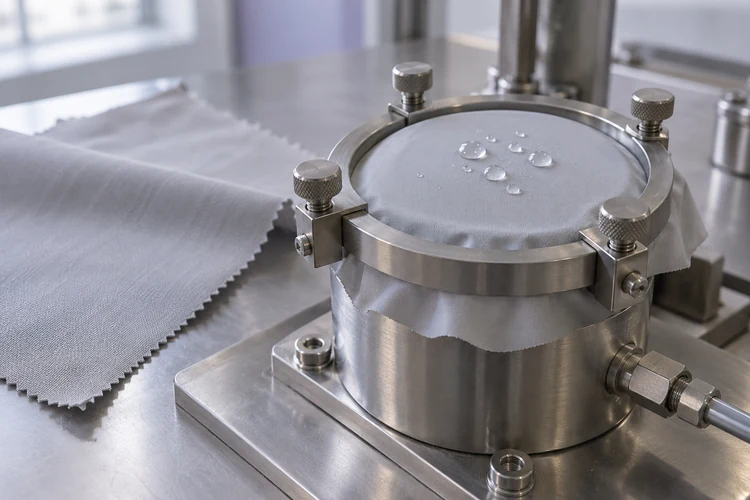
Choose tests that match the claimed property. Water repellency is different from resistance to water penetration. AATCC TM22 addresses water repellency by spray testing, while AATCC TM127 measures resistance to water penetration under hydrostatic pressure. For applicable rubber- or plastics-coated fabrics, ISO 2411:2024 provides a method for measuring coating adhesion.
Depending on the end use, repeat relevant tests after flexing, abrasion, washing, or weather exposure. An initial result may not show how the fabric performs after repeated handling.

Common coating defects
| Symptom | Possible causes | First checks |
| Peeling | Contamination, material incompatibility, inadequate cure | Surface preparation, adhesion, cure conditions |
| Pinholes | Porous fabric, trapped air, insufficient coverage | Fabric structure, foam control, coating weight |
| Streaks | Variable viscosity, tension, or applicator settings | Formulation condition, widthwise application |
| Cracking or stiffness | Unsuitable film properties or excessive coating weight | Formulation, dry coating weight, flex performance |
Compare defective material with an approved sample before changing the formulation. Fabric variation or equipment settings may be the cause.
What Should Buyers Specify?
A useful sourcing request includes:
- Fabric: Fiber content, construction, weight, width, shade, and pretreatment.
- End use: Expected water exposure, abrasion, folding, washing, or outdoor use.
- Performance: Required properties, test methods, conditions, and acceptance levels.
- Process: Available equipment, target dry coating weight, and drying or curing limits.
- Appearance: Color, opacity, surface texture, and acceptable stiffness.
For dyed substrates, include colorfastness requirements and any known bleeding or shade-change issues. The discussion of pretreatment, fabric quality, and colorfastness can help identify checks to make before coating.
Approve a sample made on production-representative fabric, then retain its test results and process settings for comparison with later lots.
FAQ
What is the difference between textile coating and finishing?
Finishing is the broader category. Coating is a finishing process that applies a formulated layer to fabric. Other finishes may change surface behavior without creating the same kind of layer.
Which coating chemistry is suitable for waterproof fabric?
Select a system based on the fabric, required resistance to water penetration, flexibility, and production equipment. Test the finished fabric against a defined specification. Seams may require separate evaluation in the final product.
Why does a fabric coating peel or crack?
Peeling may result from contamination, poor adhesion, or inadequate cure. Cracking can indicate insufficient flexibility or excessive coating weight. Compare the affected material with the approved fabric and process records.
Does coating reduce breathability?
It can. The effect depends on the formulation, coverage, and coating weight. Specify and test the required breathability alongside water resistance.