...

Contact Skychem Group for more chemical solutions, If you have questions or need more information, please contact us.
Respond within 24 hours

Types of Adjuvants in Agriculture

There’s much to gain from knowing about the different types of adjuvants in agriculture. They boost spray efficiency, cut chemical waste, and help crops absorb nutrients or pesticides easily.

Contemporary agriculture depends on such additives to ensure that all the spray droplets count. As the trend of sustainable production increases, farmers also seek adjuvants that are less harmful to the environment while staying effective.

Numerous modern high-performance solutions exist, such as silicone-based additives like Skychem Group’s, Sylic S7800. These are great for greener, more efficient farming. This blogpost is a comprehensive breakdown of the effectiveness of agricultural adjuvants, their classification, and the different choices that can be made based on the specific needs.

Types of Adjuvants in Agriculture

Adjuvant Meaning in Agriculture

Adjuvant is a substance added to a pesticide in the agriculture context, adjuvant can also be used in fertilizer, or foliar spray tank to augment the performance of the product. It doesn’t have a pesticidal effect by itself, but it improves the dispersal, retention, penetration, or mixing of the active ingredient.

Adjuvants are used to overcome difficulties such as hard water, waxy leaves, spray drift, and poor droplet retention.

Using sophisticated formulations, including silicone surfactants that reduce the surface tension significantly, farmers obtain a higher coverage, greater penetration, and reduced use of chemicals for a large crop range.

Agricultural Adjuvants Classification by Function

Adjuvants come in all sorts of flavors depending on the task, whether it’s improving adhesion, propagation, penetration.

Activator Adjuvants

Activator adjuvants enhance the activity of pesticides by helping them interact faster and cover the surface of the plant entirely.

Surfactants (wetting, spreading, penetrating agents)

The presence of surfactant lowers the surface tension, so that droplets can spread out wide and don’t bead on hairy or waxy leaves.

Silicone surfactants such as Sylic S7800 by Skychem give a characteristic “fish-bone pattern” forming spray formation that will open up a larger area of coverage with reduced spray volume.

Penetration Enhancers

They boost the ability of active ingredients to penetrate the cuticle or the surface of the leaf, and enhance uptake and action rate.

They are particularly effective for systemic herbicides, fungicides, and insecticides.

Oil-Based Activators (methylated seed oils, crop oil concentrates)

Oil-based activators also make the leaf cuticle soft so that the deeper absorption of activators can occur.

They are commonly used with herbicides to handle broadleaf weeds, enhancing translocation and fighting resistance.

Retention & Spreading Agents

Retention agents prolong the droplets on the surface of the plants, particularly during windy or dry weather.

Stickers

Stickers enhance sticking that ensures that the pesticides remain on the leaf even in the rain, during irrigation, or during movement of the leaf. They prolong the lifetime of sprays, and reduce the amount of re-application needed.

Spreaders

Spreaders assist the even distribution of droplets on the leaf, which means there is more contact area. Silicone spreaders are superior to the traditional spreaders since they make the surface tension very low.

Humectants

Humectants slow evaporation, allowing sprays more time to be absorbed, especially in hot or dry climates.

Water & Tank Mix Management Agents

Tank mix management ensures that ingredients are stable and effective, and will not have problems when mixing.

Buffering & Conditioning Agents (pH adjusters, water conditioners)

These regulate pH and counteract minerals such as calcium and magnesium, which will neutralize pesticides. Stabilizing the water chemistry and improving product performance.

Compatibility Agents

Multiple re-application of these into the tank mixes along with multiple products and compatibility agents can be used to stop separation, precipitation, or gelation. This enables the sprays to be applied evenly and uniformly.

Spray Quality Management Agents

These adjuvants deal with the size of droplets and spray patterns.

Drift Control Agents

Drift agents are used to minimize finer droplets, which may drift off-target or cause harm. They can make spray mixtures thicker without clogging nozzles, enhancing precision and safety.

Antifoaming Agents

Antifoam is used in spray tanks to remove foam, which allows the operator to mix with accuracy and to avoid overflow. There are products such as Skychem Sylic WS-220 that are made to perform this.

Table: Agricultural Adjuvants by Function

Types Key Purpose
Activator Adjuvants Surfactants, Oils,
Penetration Enhancers
Improve spreading
and absorption
Retention Agents Stickers, Spreaders, Humectants Increase adhesion
and coverage
Water Management Buffers, Conditioners, Compatibility Agents Stabilize tank mixes
Spray Quality Drift Agents, Antifoamers Control droplet behavior

Classification by Chemical Composition

There is no uniform solution to the question of adjuvants. Like recipes, their chemical composition decides how they will perform. Find one that achieves your goals.

Surfactants

Many spray programs rely on surfactants. They also determine the behavior of droplets on the leaf.

Nonionic Surfactants

Nonionic ones aren’t pH-sensitive and can be combined with the majority of agrochemicals. Nonionic surfactants such as Sylic S7800 are silicone-based and offer low surface tension and quick spreading.

Anionic Surfactants

They are utilized in application primarily as spreaders/emulsifiers, but their effects are less gentle on certain crops.

Cationic Surfactants

These have excellent cleaning and penetrating qualities but are severely harsh; thus, they are usually incorporated in controlled formulations as opposed to tank mixes.

Specialty Adjuvants

Specialty adjuvants provide performance benefits.

Organosilicone Adjuvants

These are the results of the most advanced surfactant technologies. They propagate immediately, enhance permeation, and reduce the amount of pesticides needed for effect by at least 50%.

Petroleum-Based Adjuvants

Conventional adjuvants are used in cuticle softening and enhanced herbicide penetration.

Vegetable-Oil-Based Adjuvants

These are made out of plant oils, yield good spreading, and are more environmentally friendly.

Bio-Based Adjuvants (plant-derived formulas)

Eco-conscious farmers will usually be inclined toward the use of plant-based adjuvants, which decompose quickly and will facilitate more eco-friendly agricultural procedures.

Table: Adjuvants by Chemical Composition

Types Key Purpose
Surfactants Nonionic, Anionic, Cationic Improve wetting and spreading
Specialty Adjuvants Organosilicone, Petroleum, Veg-Oil, Bio-Based Targeted performance improvements


Application Based Types

Application driven adjuvants are selected according to the pesticide or nutrient program being sprayed. Each category focuses on improving delivery, uptake, stability, or environmental performance for a specific agricultural need.

Herbicide Adjuvants

Herbicide adjuvants strengthen weed control by improving the way herbicides spread, attach, and move into the leaf. Systemic herbicides benefit most from penetration enhancers and oil based activators because they soften the cuticle and support deeper translocation. Surfactants and organosilicone spreaders are common here as they overcome waxy leaf surfaces and increase the uniformity of coverage.

Waxy Leaf with and Without an Adjuvant

Insecticide Adjuvants

Insecticide adjuvants improve contact with pests by helping droplets retain longer and distribute more evenly across plant tissue. Spreaders and stickers assist in forming a consistent film, which increases contact effectiveness for contact-based insecticides. Humectants are also used in dry conditions to slow evaporation and allow more time for the active to work.

Fungicide Adjuvants

Fungicide performance depends on surface coverage. Fungicide adjuvants focus on spreading, retention, and rainfastness. Stickers increase adhesion on fruit, vegetables, and leaf surfaces, while silicone surfactants offer rapid and uniform wetting that minimizes untreated spots. Drift control agents are often included to maintain correct droplet size and reach the canopy layers.

Fertilizer and Foliar Nutrient Adjuvants

Foliar nutrients need improved absorption rather than penetration into the cuticle. Nonionic surfactants and organosilicones help the nutrient solution wet the leaf thoroughly and enter through stomatal openings. Conditioning agents may be added to correct water hardness that interferes with nutrient uptake. Humectants are valuable here because they keep droplets hydrated longer so nutrients can be absorbed instead of drying out too fast.

Seed Treatment Adjuvants

Seed treatment adjuvants focus on uniform coating, adhesion, and compatibility with biologicals or micro-nutrient packages. Polymeric stickers help active ingredients adhere to the seed surface without dusting off. Wetting agents improve distribution around irregular seed shapes. Compatibility agents stabilize multiple components to prevent settling or clumping during treatment.

Application Type Typical Adjuvants Used Primary Purpose
Herbicide Adjuvants Nonionic surfactants, oils, organosilicones, penetration enhancers Boost spreading, cuticle softening, systemic uptake
Insecticide Adjuvants Stickers, spreaders, humectants Improve coverage, retention, slower evaporation
Fungicide Adjuvants Silicone spreaders, stickers, drift agents Enhance uniform coating and rainfastness
Fertilizer and Foliar Nutrient Adjuvants Nonionic surfactants, organosilicones, buffers, humectants Increase foliar absorption and stabilize mixes
Seed Treatment Adjuvants Polymeric binders, wetting agents, compatibility agents Achieve uniform coating and stable formulations

Choosing the Right Adjuvant

Hopefully, at this point you’ve been fully educated to make informed decisions on deciding which type of adjuvant you require for the task at hand. But before you purchase, there are still some questions to ask.

Factors to Consider

The choice of a correct adjuvant will be based on your crop, spray program, and water quality, coupled with the pesticide you’re applying.

Consider the need to have more spreading, more penetration, better compatibility, or less drift. Take into account environmental factors, dry climates positively respond to humectants, and water containing a lot of hardness should be treated with buffering agents.

Safety and Environmental Impact

Farming today needs a way of operation that is sustainable and profitable at the same time. Adjuvants that are based on silicone, such as the Sylic S7800, enable the reduction of pesticide applications, enhance rain-resistance, and reduce environmental remnants.

When selecting materials, compatibility should always be checked, wear protective equipment, and adhere to the instructions on the label to ensure the safety of most workers and ecosystems.

If you need high-performing and reliable agricultural additives, consider the entire range of solutions offered by Skychem. Try the advanced formulation aids, silicone surfactants, wetting agents, emulsifiers, and eco-friendly formulation solutions by requesting a quote on the acclaimed adjuvant manufacturer Skychem’s webpage.

Conclusion

The knowledge on adjuvants used in farming assists the farmer in maximizing the effectiveness of the spray, maximizing the performance of pesticides, and mitigating the negative effects caused to the environment.

Be familiar with the operation of each type of adjuvant, surfactants, and drift agents, to construct a spray application that will achieve predictable and sustainable results. More sophisticated solutions, such as silicone-based surfactants, are revolutionizing the system of agricultural spraying, which assists the growers in saving time, costs, and protecting crops.

If contemporary, high-quality solutions are what you seek, Skychem provides a reliable range of product lineups that would suit the modern-day farming needs.


Related reading:

  1. How Silicone Surfactants Improve Pesticide and Fertilizer Efficiency?
  2. Choosing Wetting and Spreading Agents for Hairy, Waxy and Glossy Leaves

Sandy

With years of experience in chemical dyes and textile auxiliaries, I’m dedicated to sharing insights into the latest technologies, sustainable innovations, and market trends.

Recent Articles

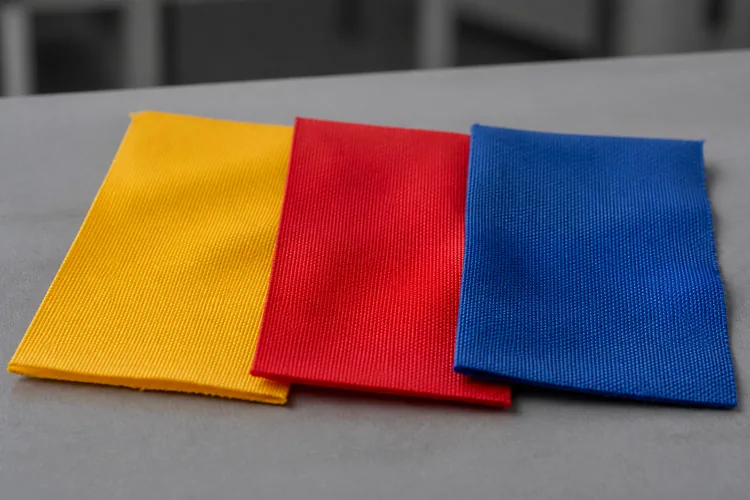
Yellow, red, and blue nylon swatches representing a compatible trichromatic acid dye set.

Trichromatic Acid Dye Selection for Consistent Nylon Shades

Table of Contents Understanding Strike Rate Factors Influencing Strike Rate Matching Strike Rates in a Combination The Role of pH in Dye Uptake pH Ranges by Dye Class Controlling pH During Dyeing Trichromatic Selection Principles Choosing Compatible Yellow, Red, Blue Typical Trichromatic Acid Dye Combinations for Nylon Light Shade Trichromatic Combination Deep Shade Trichromatic Combination Migration and Buildup Properties Avoiding Shade Shift Practical Recipe Guidelines Lab Trial Checklist FAQs What causes uneven dyeing with acid dyes on nylon? How does pH control affect reproducibility? What makes a trichromatic combination reliable? Nylon dyeing rewards precision. Acid dyes bond well with polyamide fibers, but shade consistency depends on how closely strike rate, pH, and trichromatic combinations are controlled together. A small mismatch in any one variable can shift a shade off standard, even when the recipe looks correct on paper. This article breaks down the practical factors that keep acid dye combinations compatible on nylon. Understanding Strike Rate Strike rate describes how quickly a dye moves from the bath onto the fiber. On nylon, this speed depends on dye structure, temperature ramp, and the number of available dye sites on the substrate. A dye with a fast strike rate can produce uneven color if it exhausts before the bath fully penetrates the goods, particularly on tightly constructed knits or dense yarns. Factors Influencing Strike Rate Three variables have the greatest effect on how fast a given acid dye takes up on nylon: Molecular size and structure: smaller, more mobile molecules tend to migrate and level more readily, while larger or more linear structures strike faster but migrate less once fixed. Electrolyte concentration: higher salt levels in the bath slow strike by increasing ionic competition at the fiber surface, which can help leveling but may reduce total exhaustion if not balanced correctly. Temperature ramp speed: a ramp that heats too quickly gives the dye little time to migrate before fixation, raising the risk of streaks or tailing on the goods. Matching Strike Rates in a Combination When combining dyes for a shade, each component should have a comparable strike rate. If one dye in a mix strikes noticeably faster than the others, it dominates the early stages of dyeing and shifts the shade as the bath progresses. This is one of the most common causes of reproducibility problems in nylon dyehouses, especially when recipes are adjusted without checking how the new combination behaves as a system rather than as individual dyes. The Role of pH in Dye Uptake Acid dyes require an acidic bath to bond effectively with the amine groups on nylon fiber. pH does more than set the chemical environment; it also governs how fast dye uptake occurs and how much correction is possible once dyeing has started. pH Ranges by Dye Class Different acid dye classes are formulated to perform within specific pH windows. Working outside that window changes uptake speed and can affect fastness properties. Dye Class Typical pH Range Uptake Behavior Leveling acid dyes pH 5 to 6 Slower strike, good migration, easier to correct Milling acid dyes pH 4.5 to 5.5 Moderate strike, less forgiving on unlevel dyeing Metal complex acid dyes pH 4 to 5 Faster strike, stronger fastness, tighter process control needed These ranges are starting references. Actual performance depends on the specific dye grade, liquor ratio, and machine type, so lab confirmation on the intended substrate remains necessary before scaling to bulk. Controlling pH During Dyeing Holding pH steady throughout the cycle matters as much as setting the correct starting point. A pH that drifts upward during dyeing slows uptake and can leave the shade pale or uneven, while a sharp early drop can cause the dye to strike too fast for proper migration. Buffering systems and controlled acid addition keep the bath within range from start to finish. Leveling agents and buffering auxiliaries formulated for pH and strike control help stabilize uptake speed across different fabric constructions and machine conditions, particularly on constructions prone to rapid initial strike. Trichromatic Selection Principles Trichromatic dyeing uses a yellow, red, and blue dye to build a wide range of shades from a small working palette. Compatibility across these three dyes determines how predictable the resulting shades will be, both in the lab and in bulk. Choosing Compatible Yellow, Red, Blue A workable trichromatic set should share similar strike rates, similar pH sensitivity, and comparable migration behavior. Mismatched components can produce shade drift between lab dips and production batches, even when the total dye concentration is correct. The Skyacido Acid Dyes, formulated specifically for polyamide dyeing, offers a wide shade gamut with strong inter-shade combinability, which supports matching yellow, red, and blue components as a coordinated set rather than selecting each color independently based on shade alone. The table below outlines what to check across each primary when building a trichromatic set: Component Strike Rate Check pH Sensitivity Migration Behavior Yellow Compare exhaustion curve against red and blue Note shift point where uptake accelerates Confirm redistribution at hold temperature Red Compare exhaustion curve against yellow and blue Note shift point where uptake accelerates Confirm redistribution at hold temperature Blue Compare exhaustion curve against yellow and red Note shift point where uptake accelerates Confirm redistribution at hold temperature Running this comparison during lab dip development, rather than after a bulk batch shows shade drift, catches mismatches while they are still inexpensive to correct. Typical Trichromatic Acid Dye Combinations for Nylon In practical nylon dyeing, trichromatic combinations are usually selected according to shade depth, buildup requirement, and compatibility between dyes. Different combinations may be required for light shades and deep shades to maintain balanced exhaustion, migration, and shade reproducibility. Light Shade Trichromatic Combination For light and medium shades, dyes with good migration performance and moderate strike behavior are preferred to achieve excellent leveling and shade correction ability. A typical light shade combination may include: Trichromatic Position Example Acid Dye Yellow Skyacido Yellow 199 Red Skyacido Red 337 Blue Skyacido Blue 324 This combination provides good compatibility and is

Explore More »
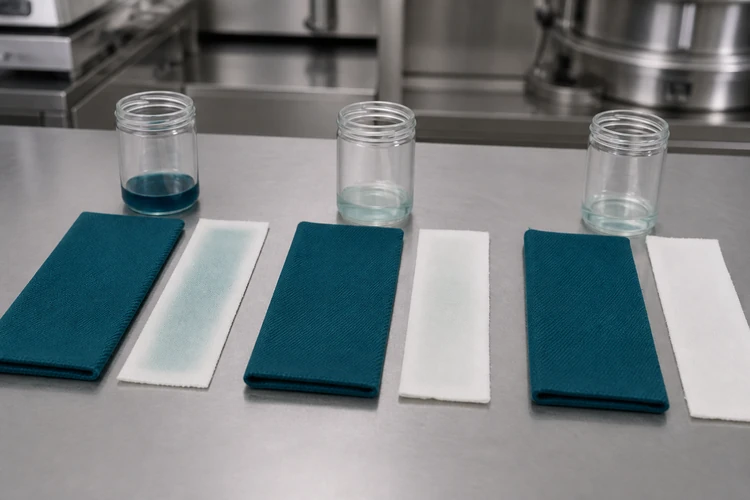
2. Low-temperature soaping leaves clearer wash liquor and less staining on adjacent white cotton strips.

Reactive Dye Soaping Guide: Better Wash Fastness, Less Back-Staining

Table of Contents What Is Reactive Dye Soaping Role in the Wash-Off Stage Why Unfixed and Hydrolyzed Dye Must Be Removed How Soaping Affects Wash Fastness Removing Hydrolyzed Dye from the Fiber Surface Connection Between Soaping and Fastness Ratings What Causes Back-Staining? Common Sources of Back-Staining Fabrics and Blends Most at Risk Key Process Parameters for Effective Soaping Temperature and Time Liquor Ratio Water Hardness and Sequestering Agents Choosing the Right Soaping Agents Anionic and Nonionic Soaping Agents Matching Agents to Fiber and Shade Depth Low-Temperature Soaping Agent Option: Sylic D2705 Key Benefits Recommended Application Performance Comparison Soaping Process Methods Cold Wash and Hot Wash Sequence One-Bath vs Multi-Step Soaping Role of Fixing Agents After Soaping Best Practices for Consistent Wash Fastness Results FAQs How long should reactive dye soaping take? Can back-staining be fixed after it happens? Does hard water affect soaping performance? Is a separate fixing agent always necessary after soaping? Reactive dye soaping is often treated as a quick step at the end of the dyeing cycle, but it has a direct effect on wash fastness and back-staining outcomes. Getting temperature, time, and agent selection right prevents costly rejects and repeat orders that eat into margins. What Is Reactive Dye Soaping Role in the Wash-Off Stage Soaping takes place after fixation, once the reactive dye has bonded to the fiber under alkaline conditions. Fabric is washed at or near boiling temperature with a detergent or specialty soaping agent to strip away everything that never formed a permanent bond with the fiber. Skipping or shortening this step leaves wash-off incomplete, and the fabric carries a hidden fastness risk that will not surface until later testing or, worse, after it reaches the customer. Why Unfixed and Hydrolyzed Dye Must Be Removed A portion of reactive dye always hydrolyzes in the dyebath instead of reacting with the fiber. Hydrolyzed dye sits loosely on the fabric surface, held only by weak physical attraction rather than a covalent bond. Left in place, it rubs off during handling, bleeds during laundering, and transfers onto lighter fabrics in the same wash load. Soaping is the step designed specifically to remove this residue before it becomes a fastness problem. How Soaping Affects Wash Fastness The quality of soaping determines much of what shows up later in fastness testing. A batch that looks correct on the shade card can still fail to wash or rub fastness if this step was rushed. Removing Hydrolyzed Dye from the Fiber Surface Effective soaping keeps loosened dye suspended in the wash liquor instead of letting it settle back onto the fabric. How completely this happens depends on agitation, liquor ratio, and the dispersing strength of the detergent or soaping agent used. Connection Between Soaping and Fastness Ratings Wash and rub fastness ratings, most commonly evaluated using AATCC colorfastness test methods, largely reflect how much unfixed dye remains after wash-off. A fabric can pass an initial shade check on the lab dip and still fail fastness testing on the bulk batch if soaping ran too briefly or at too low a temperature. What Causes Back-Staining? Common Sources of Back-Staining Back-staining happens when dye that has washed off the dyed fabric redeposits onto undyed or lighter areas in the same bath. The most common causes include: Overloaded soaping baths carrying more hydrolyzed dye than the liquor can hold Insufficient rinsing between soaping and finishing steps Soaping agents with weak dispersing power, which allow free dye particles to settle back onto the fabric Uneven liquor circulation, which creates localized zones of high dye concentration Fabrics and Blends Most at Risk Deep and dark shades generate the highest load of hydrolyzed dye and are the most frequent source of back-staining complaints. Blended fabrics, and any load that mixes dyed and undyed components, are particularly vulnerable, since redeposited dye is far more visible on the lighter portion of the fabric. Key Process Parameters for Effective Soaping Most causes of poor fastness and back-staining trace back to how tightly these three parameters are controlled. Temperature and Time Soaping typically runs at or close to boiling point for five to fifteen minutes, though the ideal combination depends on shade depth and fabric construction. Running the bath too cool slows dye removal, and cutting the time short leaves hydrolyzed dye behind even at the correct temperature. Shade depth Soaping temperature Typical time Light to medium 90 to 95°C 5 to 8 minutes Deep and dark Near boiling (98 to 100°C) 10 to 15 minutes Turquoise and problem shades Near boiling, multi-bath 15 minutes or more per bath This near-boiling range applies to conventional soaping agents. Low-temperature soaping agents are formulated to work effectively at 60 to 80°C instead, cutting energy use without giving up fastness performance (see the Sylic D2705 section below).  Liquor Ratio A tighter liquor ratio concentrates hydrolyzed dye in a smaller volume of water, which increases the risk of redeposition before it can be flushed out. Mills running jet or overflow machines at lower liquor ratios should compensate with stronger dispersing agents or an added rinse cycle. Water Hardness and Sequestering Agents Calcium, magnesium, and iron in the water supply interfere with soaping agent performance and can leave a hazy or uneven finish. A sequestering agent, such as Sylic P1501B, an anionic chelating dispersant with a pH of 2.5 to 4.0 in a 1% solution, binds these ions before soaping begins and lets the soaping agent perform as intended. Choosing the Right Soaping Agents Anionic and Nonionic Soaping Agents Anionic soaping agents are widely used for their strong dispersing action, while nonionic types perform better in hard water and at lower temperatures. Both types are available within a dyeing auxiliary range formulated for stability in alkaline baths and low-foam performance in jet machines. Matching Agents to Fiber and Shade Depth Cotton and other cellulosic fibers generally respond well to anionic soaping agents. Blends containing synthetic fibers may need a nonionic option instead, to avoid staining the more sensitive synthetic component. Deeper shades typically call

Explore More »

Reduction Clearing in Polyester Dyeing: A Complete Guide

Table of Contents What Is Reduction Clearing? Definition and Purpose Role in Disperse Dyeing Impact on Colorfastness Common Quality Complaints When Reduction Clearing Is Needed Dark and Medium Shades High Dye Concentration Recipes Blends with Cellulosic Fibers When It Can Be Skipped Process and Control Typical Recipe and Parameters Controlling Temperature and pH Avoiding Over-Reduction or Under-Reduction Rinsing and Neutralization Choosing the Right Reducing Agents Sodium Hydrosulfite Sulfur-Free Reducing Agents Low-Temperature and Sustainable Options High Wash Fastness Dyes to Reduce Clearing Load Troubleshooting Common Issues Poor Wash Fastness After Clearing Shade Change or Dulling Conclusion FAQs What Happens If You Skip It? Reduction Clearing vs Normal Washing? Can It Be Done at Low Temperature? Hydrosulfite vs Sulfur-Free Agents? A batch that looks perfect on the machine can still fail a wash fastness test days later. More often than not, the cause is unfixed disperse dye left on the fiber surface, and the fix is reduction clearing. This guide covers when the step is necessary, the chemistry behind it, and how to keep results consistent from lab dip to bulk production. What Is Reduction Clearing? Definition and Purpose Reduction clearing is a post-dyeing treatment that removes disperse dye which has not penetrated or fixed onto polyester fibers. During high temperature dyeing, some dye molecules remain on the fiber surface instead of diffusing into the polymer structure. Left untreated, this residual dye rubs off and bleeds during washing, lowering overall color fastness. A reduction clearing bath breaks down and strips away the surface dye, leaving only the dye that has properly fixed inside the fiber. Role in Disperse Dyeing Reduction clearing takes place at the end of the disperse dyeing cycle, after the main dyeing stage and before final rinsing. It is one part of a larger polyester dyeing workflow that also includes pretreatment, dyeing, and finishing. The polyester dyeing application solutions page outlines how these stages connect, along with recommended auxiliaries for each step. Impact on Colorfastness Wash and rub fastness are among the specifications buyers check most closely before accepting a shipment. Surface dye that has not been cleared is loosely bound and washes out easily, which is precisely what standardized tests such as AATCC’s laundering fastness methods are designed to detect. A properly executed reduction clearing step improves these results by removing the dye that would otherwise cause a failed test. Common Quality Complaints Mills that skip or under-perform reduction clearing tend to see a recurring pattern of issues: Color bleeding onto lighter garments in the same wash load Staining on packaging or trims during transport and storage Dull or hazy shades compared to the approved lab dip Rejected shipments after failed fastness testing at the buyer’s lab These problems are almost always traceable to residual disperse dye rather than a flaw in the dye recipe itself, which is why reduction clearing deserves the same attention as the dyeing stage it follows. When Reduction Clearing Is Needed Dark and Medium Shades Darker and medium depth shades require higher dye concentrations, which naturally leaves more unfixed dye on the fiber surface. The Skycron disperse dyes range covers both dyeing and printing applications across dark, medium, and vivid shades, and pairing these dyes with a proper reduction clearing step is standard practice for reaching acceptable fastness at these heavier depths. High Dye Concentration Recipes Any recipe with a high total dye percentage on weight of fabric (% o.w.f.) benefits from reduction clearing, not only dark shades. As a general reference, mills commonly group shade depth this way: Shade Depth Typical Dye Concentration Reduction Clearing Light Below 1% o.w.f. Often optional Medium 1 to 3% o.w.f. Recommended Dark Above 3% o.w.f. Required These figures are a general guide rather than a fixed rule, since dye class, fiber blend, and fastness targets all shift the threshold. Multi-dye combinations used for precise custom shades fall into this same logic, as several dye classes combined can leave behind varying amounts of surface residue even at a moderate total percentage. Blends with Cellulosic Fibers Polyester-cotton and polyester-viscose blends add another layer of risk. Disperse dye that has not fixed to the polyester portion can stain the cellulosic fiber, causing an unwanted tone shift across the fabric. Reduction clearing protects the intended contrast or solid shade across both fiber types. When It Can Be Skipped Very light shades with low dye loading sometimes do not require a full reduction clearing cycle, particularly when high-exhaustion dyes and well-controlled dyeing conditions are used, and a simple hot wash can be enough. Skipping the step should still be a deliberate decision based on shade depth and fastness requirements, not a shortcut taken to save time. Process and Control Typical Recipe and Parameters A standard alkaline reduction clearing bath includes a reducing agent, caustic soda or soda ash, and a wetting or dispersing agent. Sulfur-free acid-clearing systems, which run at a lower pH, are increasingly used as an alternative. A general starting point looks like this: Parameter Typical Range Reducing agent 2 to 4 g/L Alkali (NaOH or soda ash) 2 to 4 g/L Temperature 70 to 80°C Time 15 to 20 minutes Liquor ratio 1:8 to 1:15 These figures vary by shade depth, dye class, and fiber blend, so lab trials should confirm the final recipe before scaling to bulk. Controlling Temperature and pH Temperature and pH are the two variables that most affect clearing efficiency: Too cool or too brief: residual dye is left behind, and fastness suffers. Too hot or too alkaline: the polyester surface or hand feel can be affected. Most conventional recipes target a mildly alkaline pH between 9 and 11. Acid-based sulfur-free systems instead work in a neutral to mildly acidic range, depending on the product used, so the pH target should always match the chemistry selected rather than a single fixed rule. Avoiding Over-Reduction or Under-Reduction Under-reduction leaves surface dye behind, which shows up later as poor fastness. Over-reduction strips properly fixed dye from the fiber, causing shade loss, dulling, or an uneven

Explore More »
C0 vs. C6 Water Repellent Finishes

C0 vs. C6 Water Repellent Finishes: Which One Fits Your Textiles?

Table of Contents The Chemistry Behind C0 and C6 What is C6 DWR What is C0 DWR Key Structural Differences Performance Comparison Water and Oil Repellency Durability and Wash Resistance Breathability and Hand Feel Global Regulatory Landscape REACH and EU Restrictions US State Regulations Brand and Retailer Requirements Use Cases by Industry Outdoor and Sportswear Workwear and Protective Textiles Home Textiles and Upholstery Choosing the Right Finish Key Factors to Consider Testing and Certification Tips Conclusion FAQs What is the difference between C0 and C6 finishes? Is C6 DWR banned? Does C0 perform as well as C6? How do I choose between C0 and C6? Ask a fabric supplier for a water-repellent finish today, and there is a good chance you will get two very different answers: C6, or C0. Both claim to keep fabric dry. Only one is currently facing phase-out pressure from regulators in the EU, California, and New York, and from major apparel brands. For buyers sourcing water-repellent textiles right now, the choice is no longer just about performance. It is about which chemistry will still be sellable in your target market two years from now. The Chemistry Behind C0 and C6 What is C6 DWR C6 durable water repellent (DWR) finishes use short-chain fluorocarbon polymers, specifically six-carbon fluorinated side chains, to coat individual fibers. This chemistry lowers the surface energy of the fiber to roughly 12 mJ/m², which is below the surface tension of most water and oils. As a result, C6 finishes deliver both water and oil repellency, a combination that few fluorine-free systems can fully match. C6 chemistry replaced older C8 fluorotelomer finishes over a decade ago. C8 degrades into PFOA, a substance known for being persistent and bioaccumulative in the environment. C6 degrades into perfluorohexanoic acid (PFHxA) instead, which has a shorter environmental half-life and lower bioaccumulation potential. However, PFHxA is not free of regulatory scrutiny, as covered in the compliance section below. For buyers sourcing C6 products, formulations such as the Skyguard C6-C8 Waterproofer combine water and oil resistance with good wash fastness on both cellulose and synthetic fibers, applied at typical dosages of 10 to 40 g/L, and are produced without PFOS, PFOA, or APEO. What is C0 DWR C0 refers to fluorine-free water repellent chemistry. Instead of fluorocarbon side chains, C0 finishes rely on dendrimer, wax, or polyurethane-based polymers to build a hydrophobic fiber surface. These systems typically reach a surface energy of 20 to 25 mJ/m², which is sufficient to repel water effectively but generally not enough to provide strong oil repellency. Demand for C0 finishes is growing quickly because they carry no PFAS-related compliance risk, a factor that matters more each year as regulatory scope widens. Ranges such as the Skyguard Fluorine-free Waterproofer line are applied at roughly 10 to 80 g/L depending on the durability required, contain no APEO, and are built for fabrics where oil repellency is not a functional requirement, including most outerwear, home textiles, and fashion applications. Key Structural Differences Attribute C6 (Fluorocarbon) C0 (Fluorine-Free) Surface energy Approx. 12 mJ/m² Approx. 20 to 25 mJ/m² Water repellency Excellent Good to excellent Oil repellency Yes Limited or none PFAS content Present (PFHxA-based) None Typical curing temperature 150 to 160°C 160 to 180°C Performance Comparison Water and Oil Repellency C6 finishes remain the benchmark wherever oil, grease, or organic stain resistance is needed alongside water repellency, such as workwear exposed to machine oils or food-contact aprons. C0 finishes have closed most of the gap on pure water repellency, with many recent formulations achieving results comparable to C6 under standardized water resistance testing. On oil-based stains, however, C0 finishes still fall short. Durability and Wash Resistance Both chemistries rely on physical adsorption when first applied to the fabric, and this bond weakens progressively with repeated laundering and detergent exposure. A crosslinking agent extends wash durability by binding DWR polymer chains to each other and to reactive groups on the fiber surface, converting a loosely adsorbed coating into a chemically anchored one. The Sylic Cross-linking Agent, for example, is dosed in the same bath at 10 to 30 percent of the water repellent quantity, contains no APEO, PFOA, PFOS, or formaldehyde, and is compatible with both C6 and fluorine-free systems, making it a practical add-on when a finish needs to withstand 20 or more industrial or home wash cycles. Breathability and Hand Feel Both C0 and C6 finishes coat the fiber surface rather than filling the pore spaces between yarns, so breathability is generally preserved at correct application levels. Two factors most often compromise this balance: Overdosing the finish, which can partially block inter-yarn porosity and stiffen the fabric hand Uneven bath concentration, which creates localized high-add zones across the fabric width C0 finishes sometimes require slightly higher application levels to match C6 water repellency, which makes dosing accuracy and bath uniformity especially important for maintaining a soft, breathable result. Global Regulatory Landscape REACH and EU Restrictions The EU regulates PFAS in textiles under REACH Annex XVII. A restriction on PFHxA, the degradation product of C6 chemistry, takes effect in the EU and EEA from 2026, and a broader restriction covering the wider PFAS family is currently under evaluation by the European Chemicals Agency. Buyers and brands sourcing for the EU market should treat C6 as a chemistry under increasing regulatory pressure rather than a long-term safe option, and should monitor ECHA’s PFAS regulatory updates for the latest scope and timelines. US State Regulations Regulation is not limited to the EU. Two US states have already enacted PFAS restrictions specific to textiles and apparel: California AB 1817 bans the manufacture, distribution, and sale of new textile articles containing intentionally added PFAS above 100 ppm total organic fluorine as of January 1, 2025, dropping to 50 ppm from January 1, 2027. Outdoor apparel for severe wet conditions has an extension until January 1, 2028. The full requirements are set out in the official bill text. New York Environmental Conservation Law § 37-0121 prohibits the sale of new apparel

Explore More »

Contact Us for Textile Auxiliaries and Dyes

Contact Skychem Group for more chemical solutions, If you have questions or need more information, please contact us.
We will respond within 24 hours

Get a project quote

Tell us your project requirements, country, and intended application.

Sandy

With years of experience in chemical dyes and textile auxiliaries, I’m dedicated to sharing insights into the latest technologies, sustainable innovations, and market trends.

Recent Articles

Yellow, red, and blue nylon swatches representing a compatible trichromatic acid dye set.

Trichromatic Acid Dye Selection for Consistent Nylon Shades

Table of Contents Understanding Strike Rate Factors Influencing Strike Rate Matching Strike Rates in a Combination The Role of pH in Dye Uptake pH Ranges by Dye Class Controlling pH During Dyeing Trichromatic Selection Principles Choosing Compatible Yellow, Red, Blue Typical Trichromatic Acid Dye Combinations for Nylon Light Shade Trichromatic Combination Deep Shade Trichromatic Combination Migration and Buildup Properties Avoiding Shade Shift Practical Recipe Guidelines Lab Trial Checklist FAQs What causes uneven dyeing with acid dyes on nylon? How does pH control affect reproducibility? What makes a trichromatic combination reliable? Nylon dyeing rewards precision. Acid dyes bond well with polyamide fibers, but shade consistency depends on how closely strike rate, pH, and trichromatic combinations are controlled together. A small mismatch in any one variable can shift a shade off standard, even when the recipe looks correct on paper. This article breaks down the practical factors that keep acid dye combinations compatible on nylon. Understanding Strike Rate Strike rate describes how quickly a dye moves from the bath onto the fiber. On nylon, this speed depends on dye structure, temperature ramp, and the number of available dye sites on the substrate. A dye with a fast strike rate can produce uneven color if it exhausts before the bath fully penetrates the goods, particularly on tightly constructed knits or dense yarns. Factors Influencing Strike Rate Three variables have the greatest effect on how fast a given acid dye takes up on nylon: Molecular size and structure: smaller, more mobile molecules tend to migrate and level more readily, while larger or more linear structures strike faster but migrate less once fixed. Electrolyte concentration: higher salt levels in the bath slow strike by increasing ionic competition at the fiber surface, which can help leveling but may reduce total exhaustion if not balanced correctly. Temperature ramp speed: a ramp that heats too quickly gives the dye little time to migrate before fixation, raising the risk of streaks or tailing on the goods. Matching Strike Rates in a Combination When combining dyes for a shade, each component should have a comparable strike rate. If one dye in a mix strikes noticeably faster than the others, it dominates the early stages of dyeing and shifts the shade as the bath progresses. This is one of the most common causes of reproducibility problems in nylon dyehouses, especially when recipes are adjusted without checking how the new combination behaves as a system rather than as individual dyes. The Role of pH in Dye Uptake Acid dyes require an acidic bath to bond effectively with the amine groups on nylon fiber. pH does more than set the chemical environment; it also governs how fast dye uptake occurs and how much correction is possible once dyeing has started. pH Ranges by Dye Class Different acid dye classes are formulated to perform within specific pH windows. Working outside that window changes uptake speed and can affect fastness properties. Dye Class Typical pH Range Uptake Behavior Leveling acid dyes pH 5 to 6 Slower strike, good migration, easier to correct Milling acid dyes pH 4.5 to 5.5 Moderate strike, less forgiving on unlevel dyeing Metal complex acid dyes pH 4 to 5 Faster strike, stronger fastness, tighter process control needed These ranges are starting references. Actual performance depends on the specific dye grade, liquor ratio, and machine type, so lab confirmation on the intended substrate remains necessary before scaling to bulk. Controlling pH During Dyeing Holding pH steady throughout the cycle matters as much as setting the correct starting point. A pH that drifts upward during dyeing slows uptake and can leave the shade pale or uneven, while a sharp early drop can cause the dye to strike too fast for proper migration. Buffering systems and controlled acid addition keep the bath within range from start to finish. Leveling agents and buffering auxiliaries formulated for pH and strike control help stabilize uptake speed across different fabric constructions and machine conditions, particularly on constructions prone to rapid initial strike. Trichromatic Selection Principles Trichromatic dyeing uses a yellow, red, and blue dye to build a wide range of shades from a small working palette. Compatibility across these three dyes determines how predictable the resulting shades will be, both in the lab and in bulk. Choosing Compatible Yellow, Red, Blue A workable trichromatic set should share similar strike rates, similar pH sensitivity, and comparable migration behavior. Mismatched components can produce shade drift between lab dips and production batches, even when the total dye concentration is correct. The Skyacido Acid Dyes, formulated specifically for polyamide dyeing, offers a wide shade gamut with strong inter-shade combinability, which supports matching yellow, red, and blue components as a coordinated set rather than selecting each color independently based on shade alone. The table below outlines what to check across each primary when building a trichromatic set: Component Strike Rate Check pH Sensitivity Migration Behavior Yellow Compare exhaustion curve against red and blue Note shift point where uptake accelerates Confirm redistribution at hold temperature Red Compare exhaustion curve against yellow and blue Note shift point where uptake accelerates Confirm redistribution at hold temperature Blue Compare exhaustion curve against yellow and red Note shift point where uptake accelerates Confirm redistribution at hold temperature Running this comparison during lab dip development, rather than after a bulk batch shows shade drift, catches mismatches while they are still inexpensive to correct. Typical Trichromatic Acid Dye Combinations for Nylon In practical nylon dyeing, trichromatic combinations are usually selected according to shade depth, buildup requirement, and compatibility between dyes. Different combinations may be required for light shades and deep shades to maintain balanced exhaustion, migration, and shade reproducibility. Light Shade Trichromatic Combination For light and medium shades, dyes with good migration performance and moderate strike behavior are preferred to achieve excellent leveling and shade correction ability. A typical light shade combination may include: Trichromatic Position Example Acid Dye Yellow Skyacido Yellow 199 Red Skyacido Red 337 Blue Skyacido Blue 324 This combination provides good compatibility and is

Explore More »
2. Low-temperature soaping leaves clearer wash liquor and less staining on adjacent white cotton strips.

Reactive Dye Soaping Guide: Better Wash Fastness, Less Back-Staining

Table of Contents What Is Reactive Dye Soaping Role in the Wash-Off Stage Why Unfixed and Hydrolyzed Dye Must Be Removed How Soaping Affects Wash Fastness Removing Hydrolyzed Dye from the Fiber Surface Connection Between Soaping and Fastness Ratings What Causes Back-Staining? Common Sources of Back-Staining Fabrics and Blends Most at Risk Key Process Parameters for Effective Soaping Temperature and Time Liquor Ratio Water Hardness and Sequestering Agents Choosing the Right Soaping Agents Anionic and Nonionic Soaping Agents Matching Agents to Fiber and Shade Depth Low-Temperature Soaping Agent Option: Sylic D2705 Key Benefits Recommended Application Performance Comparison Soaping Process Methods Cold Wash and Hot Wash Sequence One-Bath vs Multi-Step Soaping Role of Fixing Agents After Soaping Best Practices for Consistent Wash Fastness Results FAQs How long should reactive dye soaping take? Can back-staining be fixed after it happens? Does hard water affect soaping performance? Is a separate fixing agent always necessary after soaping? Reactive dye soaping is often treated as a quick step at the end of the dyeing cycle, but it has a direct effect on wash fastness and back-staining outcomes. Getting temperature, time, and agent selection right prevents costly rejects and repeat orders that eat into margins. What Is Reactive Dye Soaping Role in the Wash-Off Stage Soaping takes place after fixation, once the reactive dye has bonded to the fiber under alkaline conditions. Fabric is washed at or near boiling temperature with a detergent or specialty soaping agent to strip away everything that never formed a permanent bond with the fiber. Skipping or shortening this step leaves wash-off incomplete, and the fabric carries a hidden fastness risk that will not surface until later testing or, worse, after it reaches the customer. Why Unfixed and Hydrolyzed Dye Must Be Removed A portion of reactive dye always hydrolyzes in the dyebath instead of reacting with the fiber. Hydrolyzed dye sits loosely on the fabric surface, held only by weak physical attraction rather than a covalent bond. Left in place, it rubs off during handling, bleeds during laundering, and transfers onto lighter fabrics in the same wash load. Soaping is the step designed specifically to remove this residue before it becomes a fastness problem. How Soaping Affects Wash Fastness The quality of soaping determines much of what shows up later in fastness testing. A batch that looks correct on the shade card can still fail to wash or rub fastness if this step was rushed. Removing Hydrolyzed Dye from the Fiber Surface Effective soaping keeps loosened dye suspended in the wash liquor instead of letting it settle back onto the fabric. How completely this happens depends on agitation, liquor ratio, and the dispersing strength of the detergent or soaping agent used. Connection Between Soaping and Fastness Ratings Wash and rub fastness ratings, most commonly evaluated using AATCC colorfastness test methods, largely reflect how much unfixed dye remains after wash-off. A fabric can pass an initial shade check on the lab dip and still fail fastness testing on the bulk batch if soaping ran too briefly or at too low a temperature. What Causes Back-Staining? Common Sources of Back-Staining Back-staining happens when dye that has washed off the dyed fabric redeposits onto undyed or lighter areas in the same bath. The most common causes include: Overloaded soaping baths carrying more hydrolyzed dye than the liquor can hold Insufficient rinsing between soaping and finishing steps Soaping agents with weak dispersing power, which allow free dye particles to settle back onto the fabric Uneven liquor circulation, which creates localized zones of high dye concentration Fabrics and Blends Most at Risk Deep and dark shades generate the highest load of hydrolyzed dye and are the most frequent source of back-staining complaints. Blended fabrics, and any load that mixes dyed and undyed components, are particularly vulnerable, since redeposited dye is far more visible on the lighter portion of the fabric. Key Process Parameters for Effective Soaping Most causes of poor fastness and back-staining trace back to how tightly these three parameters are controlled. Temperature and Time Soaping typically runs at or close to boiling point for five to fifteen minutes, though the ideal combination depends on shade depth and fabric construction. Running the bath too cool slows dye removal, and cutting the time short leaves hydrolyzed dye behind even at the correct temperature. Shade depth Soaping temperature Typical time Light to medium 90 to 95°C 5 to 8 minutes Deep and dark Near boiling (98 to 100°C) 10 to 15 minutes Turquoise and problem shades Near boiling, multi-bath 15 minutes or more per bath This near-boiling range applies to conventional soaping agents. Low-temperature soaping agents are formulated to work effectively at 60 to 80°C instead, cutting energy use without giving up fastness performance (see the Sylic D2705 section below).  Liquor Ratio A tighter liquor ratio concentrates hydrolyzed dye in a smaller volume of water, which increases the risk of redeposition before it can be flushed out. Mills running jet or overflow machines at lower liquor ratios should compensate with stronger dispersing agents or an added rinse cycle. Water Hardness and Sequestering Agents Calcium, magnesium, and iron in the water supply interfere with soaping agent performance and can leave a hazy or uneven finish. A sequestering agent, such as Sylic P1501B, an anionic chelating dispersant with a pH of 2.5 to 4.0 in a 1% solution, binds these ions before soaping begins and lets the soaping agent perform as intended. Choosing the Right Soaping Agents Anionic and Nonionic Soaping Agents Anionic soaping agents are widely used for their strong dispersing action, while nonionic types perform better in hard water and at lower temperatures. Both types are available within a dyeing auxiliary range formulated for stability in alkaline baths and low-foam performance in jet machines. Matching Agents to Fiber and Shade Depth Cotton and other cellulosic fibers generally respond well to anionic soaping agents. Blends containing synthetic fibers may need a nonionic option instead, to avoid staining the more sensitive synthetic component. Deeper shades typically call

Explore More »

Reduction Clearing in Polyester Dyeing: A Complete Guide

Table of Contents What Is Reduction Clearing? Definition and Purpose Role in Disperse Dyeing Impact on Colorfastness Common Quality Complaints When Reduction Clearing Is Needed Dark and Medium Shades High Dye Concentration Recipes Blends with Cellulosic Fibers When It Can Be Skipped Process and Control Typical Recipe and Parameters Controlling Temperature and pH Avoiding Over-Reduction or Under-Reduction Rinsing and Neutralization Choosing the Right Reducing Agents Sodium Hydrosulfite Sulfur-Free Reducing Agents Low-Temperature and Sustainable Options High Wash Fastness Dyes to Reduce Clearing Load Troubleshooting Common Issues Poor Wash Fastness After Clearing Shade Change or Dulling Conclusion FAQs What Happens If You Skip It? Reduction Clearing vs Normal Washing? Can It Be Done at Low Temperature? Hydrosulfite vs Sulfur-Free Agents? A batch that looks perfect on the machine can still fail a wash fastness test days later. More often than not, the cause is unfixed disperse dye left on the fiber surface, and the fix is reduction clearing. This guide covers when the step is necessary, the chemistry behind it, and how to keep results consistent from lab dip to bulk production. What Is Reduction Clearing? Definition and Purpose Reduction clearing is a post-dyeing treatment that removes disperse dye which has not penetrated or fixed onto polyester fibers. During high temperature dyeing, some dye molecules remain on the fiber surface instead of diffusing into the polymer structure. Left untreated, this residual dye rubs off and bleeds during washing, lowering overall color fastness. A reduction clearing bath breaks down and strips away the surface dye, leaving only the dye that has properly fixed inside the fiber. Role in Disperse Dyeing Reduction clearing takes place at the end of the disperse dyeing cycle, after the main dyeing stage and before final rinsing. It is one part of a larger polyester dyeing workflow that also includes pretreatment, dyeing, and finishing. The polyester dyeing application solutions page outlines how these stages connect, along with recommended auxiliaries for each step. Impact on Colorfastness Wash and rub fastness are among the specifications buyers check most closely before accepting a shipment. Surface dye that has not been cleared is loosely bound and washes out easily, which is precisely what standardized tests such as AATCC’s laundering fastness methods are designed to detect. A properly executed reduction clearing step improves these results by removing the dye that would otherwise cause a failed test. Common Quality Complaints Mills that skip or under-perform reduction clearing tend to see a recurring pattern of issues: Color bleeding onto lighter garments in the same wash load Staining on packaging or trims during transport and storage Dull or hazy shades compared to the approved lab dip Rejected shipments after failed fastness testing at the buyer’s lab These problems are almost always traceable to residual disperse dye rather than a flaw in the dye recipe itself, which is why reduction clearing deserves the same attention as the dyeing stage it follows. When Reduction Clearing Is Needed Dark and Medium Shades Darker and medium depth shades require higher dye concentrations, which naturally leaves more unfixed dye on the fiber surface. The Skycron disperse dyes range covers both dyeing and printing applications across dark, medium, and vivid shades, and pairing these dyes with a proper reduction clearing step is standard practice for reaching acceptable fastness at these heavier depths. High Dye Concentration Recipes Any recipe with a high total dye percentage on weight of fabric (% o.w.f.) benefits from reduction clearing, not only dark shades. As a general reference, mills commonly group shade depth this way: Shade Depth Typical Dye Concentration Reduction Clearing Light Below 1% o.w.f. Often optional Medium 1 to 3% o.w.f. Recommended Dark Above 3% o.w.f. Required These figures are a general guide rather than a fixed rule, since dye class, fiber blend, and fastness targets all shift the threshold. Multi-dye combinations used for precise custom shades fall into this same logic, as several dye classes combined can leave behind varying amounts of surface residue even at a moderate total percentage. Blends with Cellulosic Fibers Polyester-cotton and polyester-viscose blends add another layer of risk. Disperse dye that has not fixed to the polyester portion can stain the cellulosic fiber, causing an unwanted tone shift across the fabric. Reduction clearing protects the intended contrast or solid shade across both fiber types. When It Can Be Skipped Very light shades with low dye loading sometimes do not require a full reduction clearing cycle, particularly when high-exhaustion dyes and well-controlled dyeing conditions are used, and a simple hot wash can be enough. Skipping the step should still be a deliberate decision based on shade depth and fastness requirements, not a shortcut taken to save time. Process and Control Typical Recipe and Parameters A standard alkaline reduction clearing bath includes a reducing agent, caustic soda or soda ash, and a wetting or dispersing agent. Sulfur-free acid-clearing systems, which run at a lower pH, are increasingly used as an alternative. A general starting point looks like this: Parameter Typical Range Reducing agent 2 to 4 g/L Alkali (NaOH or soda ash) 2 to 4 g/L Temperature 70 to 80°C Time 15 to 20 minutes Liquor ratio 1:8 to 1:15 These figures vary by shade depth, dye class, and fiber blend, so lab trials should confirm the final recipe before scaling to bulk. Controlling Temperature and pH Temperature and pH are the two variables that most affect clearing efficiency: Too cool or too brief: residual dye is left behind, and fastness suffers. Too hot or too alkaline: the polyester surface or hand feel can be affected. Most conventional recipes target a mildly alkaline pH between 9 and 11. Acid-based sulfur-free systems instead work in a neutral to mildly acidic range, depending on the product used, so the pH target should always match the chemistry selected rather than a single fixed rule. Avoiding Over-Reduction or Under-Reduction Under-reduction leaves surface dye behind, which shows up later as poor fastness. Over-reduction strips properly fixed dye from the fiber, causing shade loss, dulling, or an uneven

Explore More »
C0 vs. C6 Water Repellent Finishes

C0 vs. C6 Water Repellent Finishes: Which One Fits Your Textiles?

Table of Contents The Chemistry Behind C0 and C6 What is C6 DWR What is C0 DWR Key Structural Differences Performance Comparison Water and Oil Repellency Durability and Wash Resistance Breathability and Hand Feel Global Regulatory Landscape REACH and EU Restrictions US State Regulations Brand and Retailer Requirements Use Cases by Industry Outdoor and Sportswear Workwear and Protective Textiles Home Textiles and Upholstery Choosing the Right Finish Key Factors to Consider Testing and Certification Tips Conclusion FAQs What is the difference between C0 and C6 finishes? Is C6 DWR banned? Does C0 perform as well as C6? How do I choose between C0 and C6? Ask a fabric supplier for a water-repellent finish today, and there is a good chance you will get two very different answers: C6, or C0. Both claim to keep fabric dry. Only one is currently facing phase-out pressure from regulators in the EU, California, and New York, and from major apparel brands. For buyers sourcing water-repellent textiles right now, the choice is no longer just about performance. It is about which chemistry will still be sellable in your target market two years from now. The Chemistry Behind C0 and C6 What is C6 DWR C6 durable water repellent (DWR) finishes use short-chain fluorocarbon polymers, specifically six-carbon fluorinated side chains, to coat individual fibers. This chemistry lowers the surface energy of the fiber to roughly 12 mJ/m², which is below the surface tension of most water and oils. As a result, C6 finishes deliver both water and oil repellency, a combination that few fluorine-free systems can fully match. C6 chemistry replaced older C8 fluorotelomer finishes over a decade ago. C8 degrades into PFOA, a substance known for being persistent and bioaccumulative in the environment. C6 degrades into perfluorohexanoic acid (PFHxA) instead, which has a shorter environmental half-life and lower bioaccumulation potential. However, PFHxA is not free of regulatory scrutiny, as covered in the compliance section below. For buyers sourcing C6 products, formulations such as the Skyguard C6-C8 Waterproofer combine water and oil resistance with good wash fastness on both cellulose and synthetic fibers, applied at typical dosages of 10 to 40 g/L, and are produced without PFOS, PFOA, or APEO. What is C0 DWR C0 refers to fluorine-free water repellent chemistry. Instead of fluorocarbon side chains, C0 finishes rely on dendrimer, wax, or polyurethane-based polymers to build a hydrophobic fiber surface. These systems typically reach a surface energy of 20 to 25 mJ/m², which is sufficient to repel water effectively but generally not enough to provide strong oil repellency. Demand for C0 finishes is growing quickly because they carry no PFAS-related compliance risk, a factor that matters more each year as regulatory scope widens. Ranges such as the Skyguard Fluorine-free Waterproofer line are applied at roughly 10 to 80 g/L depending on the durability required, contain no APEO, and are built for fabrics where oil repellency is not a functional requirement, including most outerwear, home textiles, and fashion applications. Key Structural Differences Attribute C6 (Fluorocarbon) C0 (Fluorine-Free) Surface energy Approx. 12 mJ/m² Approx. 20 to 25 mJ/m² Water repellency Excellent Good to excellent Oil repellency Yes Limited or none PFAS content Present (PFHxA-based) None Typical curing temperature 150 to 160°C 160 to 180°C Performance Comparison Water and Oil Repellency C6 finishes remain the benchmark wherever oil, grease, or organic stain resistance is needed alongside water repellency, such as workwear exposed to machine oils or food-contact aprons. C0 finishes have closed most of the gap on pure water repellency, with many recent formulations achieving results comparable to C6 under standardized water resistance testing. On oil-based stains, however, C0 finishes still fall short. Durability and Wash Resistance Both chemistries rely on physical adsorption when first applied to the fabric, and this bond weakens progressively with repeated laundering and detergent exposure. A crosslinking agent extends wash durability by binding DWR polymer chains to each other and to reactive groups on the fiber surface, converting a loosely adsorbed coating into a chemically anchored one. The Sylic Cross-linking Agent, for example, is dosed in the same bath at 10 to 30 percent of the water repellent quantity, contains no APEO, PFOA, PFOS, or formaldehyde, and is compatible with both C6 and fluorine-free systems, making it a practical add-on when a finish needs to withstand 20 or more industrial or home wash cycles. Breathability and Hand Feel Both C0 and C6 finishes coat the fiber surface rather than filling the pore spaces between yarns, so breathability is generally preserved at correct application levels. Two factors most often compromise this balance: Overdosing the finish, which can partially block inter-yarn porosity and stiffen the fabric hand Uneven bath concentration, which creates localized high-add zones across the fabric width C0 finishes sometimes require slightly higher application levels to match C6 water repellency, which makes dosing accuracy and bath uniformity especially important for maintaining a soft, breathable result. Global Regulatory Landscape REACH and EU Restrictions The EU regulates PFAS in textiles under REACH Annex XVII. A restriction on PFHxA, the degradation product of C6 chemistry, takes effect in the EU and EEA from 2026, and a broader restriction covering the wider PFAS family is currently under evaluation by the European Chemicals Agency. Buyers and brands sourcing for the EU market should treat C6 as a chemistry under increasing regulatory pressure rather than a long-term safe option, and should monitor ECHA’s PFAS regulatory updates for the latest scope and timelines. US State Regulations Regulation is not limited to the EU. Two US states have already enacted PFAS restrictions specific to textiles and apparel: California AB 1817 bans the manufacture, distribution, and sale of new textile articles containing intentionally added PFAS above 100 ppm total organic fluorine as of January 1, 2025, dropping to 50 ppm from January 1, 2027. Outdoor apparel for severe wet conditions has an extension until January 1, 2028. The full requirements are set out in the official bill text. New York Environmental Conservation Law § 37-0121 prohibits the sale of new apparel

Explore More »

Contact Us for Textile Auxiliaries and Dyes

Contact Skychem Group for more chemical solutions, If you have questions or need more information, please contact us.
We will respond within 24 hours

Get a project quote

Please tell us the requirements, the country and the application.

Scroll to Top
Email WhatsApp

Contact Us for Textile Auxiliaries and Dyes

Contact Skychem Group for more chemical solutions, If you have questions or need more information, please contact us.
We will respond within 24 hours