Dye houses rarely fail because of the dye alone. More often it is an auxiliary that behaves one way in the beaker and another in the machine. This guide gives B2B buyers and mills a practical method for evaluating auxiliary samples before any bulk dyeing run.
Why Sample Evaluation Matters
Auxiliaries are small in dosage but large in influence. A leveling agent, dispersant, or fixing agent can decide whether a batch comes out even and bright or patchy and dull. Testing a sample first is the cheapest insurance against an expensive surprise.
Cost of Bulk Failures
A failed bulk lot is rarely just the cost of the chemicals. The real loss usually includes:
- Wasted fabric that may not be recoverable
- Machine time and labor spent on a batch that has to be redone
- Missed delivery dates and strained customer relationships
- Extra cost from stripping or reprocessing color
Impact on Color and Fastness
Auxiliaries shape both the shade you hit and how long it lasts. An inconsistent dispersing agent can shift color yield from batch to batch, while a weak fixing agent can leave you with poor wash and rubbing performance. Catching these issues at the sample stage keeps color reproducible and fastness within target.
Key Properties to Test
Before any fabric touches the dye bath, evaluate the auxiliary on its own. These basic checks reveal a great deal about how the product will behave later, and they take only minutes.
Appearance and Solubility
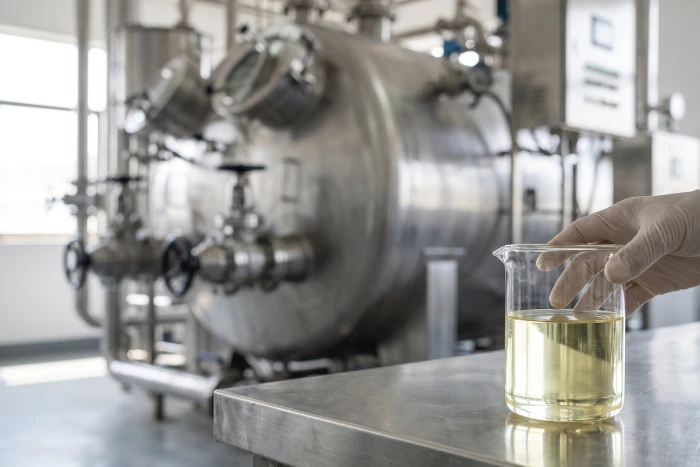
Start with what you can see. Note the color, clarity, and any sediment or separation, then test how readily the product dissolves or disperses in water at working temperature. Poor solubility often signals aged stock or an off-spec batch.
pH and Ionic Compatibility
Measure the pH of the working solution and confirm it matches the technical data sheet. Check the ionic nature as well, since combining a cationic product with an anionic one can cause precipitation. A quick check here prevents cloudy baths and spotting later.
Heat and Shear Stability
Dyeing happens under heat and mechanical agitation, so the test should reflect that. Hold the sample at process temperature and watch for any breakdown, gelling, or loss of function. Shear from pumps and jets can also affect performance, so simulate it where possible.
Compatibility With Other Chemicals
An auxiliary rarely works alone. Combine it with the dyes and other agents you actually use, then watch for haze, foam, or precipitation. The goal is a clean, stable bath that behaves the same way every time. The checklist below summarizes these solo checks.
| Property | What to check | Why it matters |
| Appearance | Color, clarity, sediment | Flags off-spec or aged stock |
| Solubility | Dissolves cleanly at working temperature | Prevents spots and uneven uptake |
| pH | Matches the data sheet | Affects dye fixation and shade |
| Ionic compatibility | No precipitation when mixed | Avoids cloudy baths and deposits |
| Heat and shear stability | Stays stable under process conditions | Predicts real bulk behavior |
Skychem Group brings nearly three decades of formulation know-how to pre-treatment, dyeing, printing, softening, and functional finishing auxiliaries. The Textile Auxiliary Solutions are built around the qualities that decide a sample evaluation: batch-to-batch consistency, low-foam stability that holds from the beaker into high-temperature bulk dyeing, and APEO-free formulas that ease compliance for global buyers. Formula optimization and troubleshooting support come with them, helping a promising sample scale cleanly into production.
Lab Dip Testing
Once the auxiliary passes its solo checks, put it to work in a controlled lab dip. This is where you confirm it performs on fabric, not just in a beaker.
Replicate Bulk Conditions
A lab dip is only useful if it mirrors production reality. Match the dip to your dye house as closely as the equipment allows:
- Fiber type and blend
- Dye class and shade depth
- Auxiliary type and dosage
- Process curve, including heating and cooling rates
The smaller the gap between lab and bulk, the more your results will mean.
Lab dips are where a dyeing auxiliary proves it behaves the same in a beaker as in a machine. Skychem Group’s Dyeing Auxiliaries cover dispersing, leveling, fixing, penetrating, and soaping agents for polyester, cotton, nylon, wool, and acrylic, with low-foam grades that stay stable through high-temperature, high-pressure jet dyeing. Reliable dispersing and leveling at process heat helps a promising sample reproduce the same even shade once it scales to bulk.
Control Temperature and Liquor Ratio
Temperature and liquor ratio drive how dye and auxiliary interact. Keep them fixed and documented across every trial so that any difference in result comes from the sample, not from the method. Even small swings here can mask or mimic a real performance issue.
Record Each Variable
Reliable evaluation is repeatable evaluation. Log every input so you can compare fairly and trace any problem back to its cause. A consistent record sheet turns scattered trials into dependable evidence.
| Variable | Example entry |
| Fiber and weight | 100% polyester, 5 g |
| Dye and shade | Disperse blue, 1.5% owf |
| Auxiliary and dosage | Leveling agent, 1.0 g/L |
| Liquor ratio | 1:10 |
| Temperature and time | 130°C, 30 min |
| pH | 4.5 |
Evaluating Results
With the dip complete, judge the outcome against clear targets rather than first impressions.
Color Yield and Shade
Compare the dyed sample to your standard under controlled lighting. Look at depth, brightness, and whether the shade sits on target. A strong auxiliary helps you reach full color value at the dosage you expect.
Leveling and Penetration
Inspect the fabric for even coverage from surface to core. Streaks, patches, or pale centers point to leveling or penetration problems that will only grow worse at bulk scale.
Batch Reproducibility
Run the dip more than once. An auxiliary that gives the same result across repeats is one you can rely on, while wide variation between identical trials is a warning sign worth taking seriously.
Checking Fastness
A strong shade means little if it washes out or rubs off. Fastness testing confirms the color will survive real use.
Wash and Rubbing Fastness
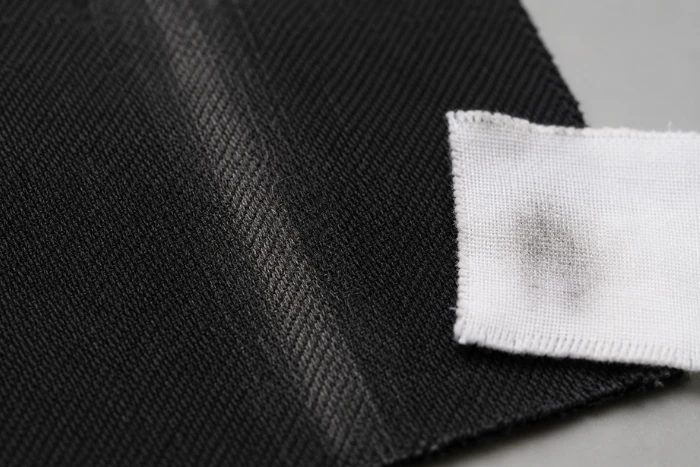
Test how well the color holds through laundering and how much transfers under rubbing. These are commonly assessed with methods such as ISO 105-C06 for wash fastness and AATCC 8 for crocking. Strong results here usually trace back to a well-chosen fixing or dyeing auxiliary.
When a sample needs to clear demanding wash fastness checks, Skychem Group’s High Washing Fastness Dyes give polyester and polyester/spandex three options to match the target: TXF, KXF, and SWF. The SWF series holds strong wash fastness after heat setting at 180°C and keeps cross-staining low on adjacent fibers, the two results a wash fastness test scrutinizes most.
Light and Perspiration Fastness
For garments exposed to sun or skin contact, check light and perspiration fastness as well. The table below summarizes the common tests so you can match them to the intended end use.
| Test | Common method | What it checks |
| Wash fastness | ISO 105-C06 | Color loss and staining after laundering |
| Rubbing (crocking) | ISO 105-X12 / AATCC 8 | Color transfer under dry and wet rubbing |
| Light fastness | ISO 105-B02 | Fading under light exposure |
| Perspiration | ISO 105-E04 | Color change from acidic and alkaline sweat |
Matching fastness targets to the end use, alongside any restricted-substance requirements such as OEKO-TEX Standard 100, keeps results aligned with customer expectations from the very first sample.
Conclusion
Evaluating auxiliary samples well protects color, cost, and reputation. Test the basics, run honest lab dips, and check fastness against real targets. When production is ready to scale, Skychem Group’s Services provide formulation and technical support to bridge the gap from sample to bulk.
FAQs
How many samples should I test before approving an auxiliary?
At minimum, run each lab dip two or three times to confirm the result is repeatable. For a new supplier, test across more than one production batch so you can judge consistency, not just a single good lot.
Can I trust a supplier’s technical data sheet instead of testing?
A data sheet is a useful starting point, but it describes ideal conditions. Your fiber, water, dyes, and equipment are unique, so always verify performance in your own lab before bulk production.
How closely should a lab dip match bulk conditions?
As closely as possible. Match fiber type, dye class, dosage, liquor ratio, temperature, and process time. Any factor you cannot reproduce exactly is worth noting, so its effect on the result can be judged later.
Why do some auxiliary samples pass in the lab but fail in bulk?
Two causes go beyond a simple conditions mismatch. The auxiliary can vary from batch to batch, so one good sample does not guarantee the next shipment. Some effects also appear only at scale, such as foam building up in a jet machine or oligomers releasing from polyester at high temperature. Testing across more than one batch helps catch both.
Do natural and synthetic fibers need different evaluation steps?
The framework is the same, but the specifics differ. Fiber type changes the dye class, the suitable auxiliaries, and the fastness targets, so always test with the exact fiber and dye system you plan to run in production.
Recommended reading: